
What Holds Europe Together? The Unfinished History of the European Union
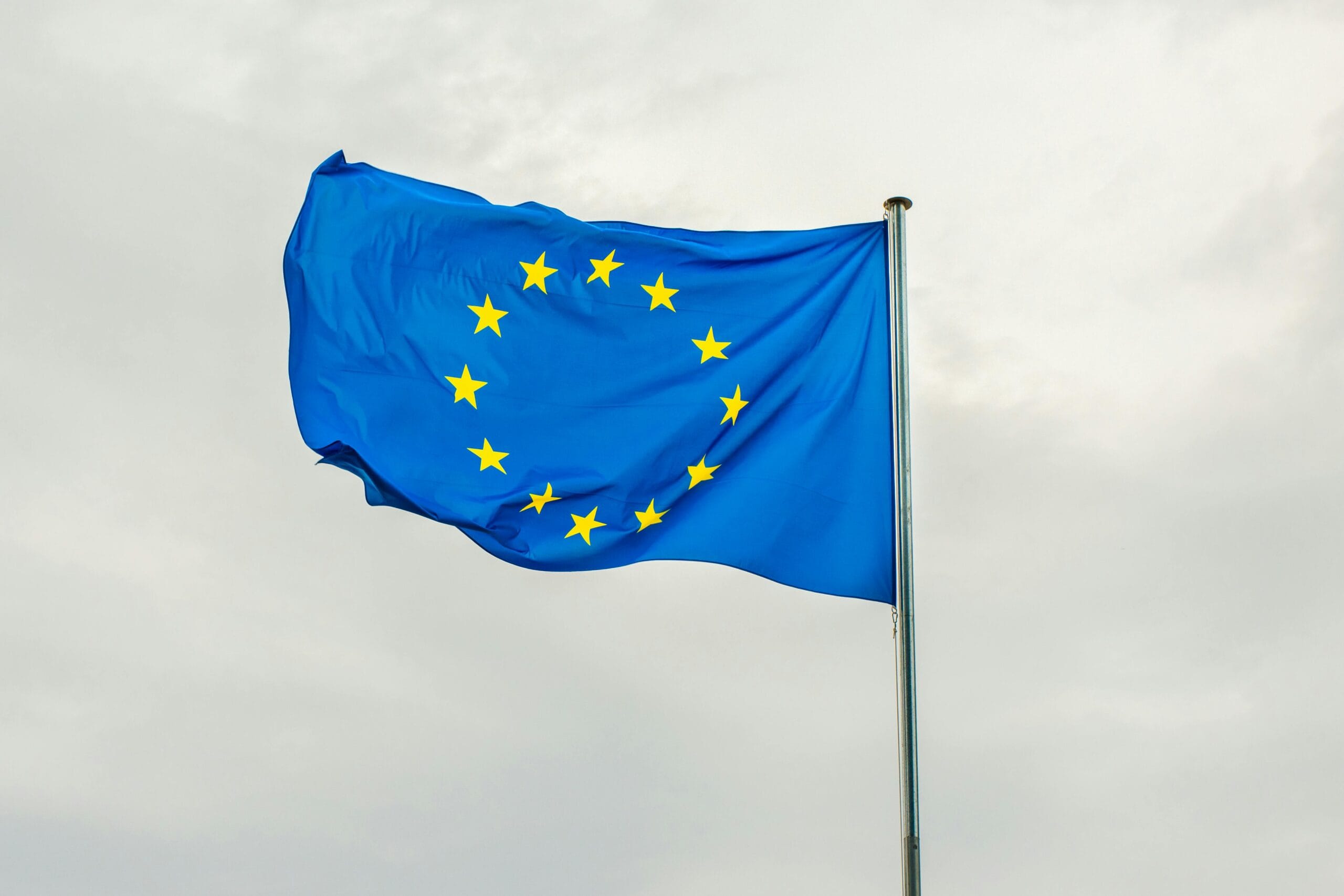
The history of the European Union is not just a sequence of treaties and institutions; it is a living project born from war, crisis, and reinvention. Europe today is no longer merely a patchwork of sovereign states, but a political experiment and a bold vision that grew out of catastrophe. Born from the rubble of 1945, when the continent lay shattered by war, integration was less a choice than a necessity. What emerged was not just a recovery plan, but a radical attempt to reimagine the very order of Europe, binding nations so tightly together that war between them would no longer be conceivable.
The story of this transformation reads less like the dry minutes of diplomatic summits and more like a drama in chapters—with acts of statesmanship, moments of near collapse, and episodes of daring reinvention. From the early pooling of coal and steel, through the triumphs of enlargement, to the agonies of Brexit, the European Union has been built in fits and starts, through crises that threatened its survival but often spurred its evolution.
Today’s 27-member European Union is the product of compromise and vision, forged equally by practical necessity and the grand ambitions of its architects. Its survival over seven decades is itself a political miracle, unmatched in the history of a continent once synonymous with division and bloodshed.
From War to Union: The Origins of European Integration
The Post-War Visionaries
It was the spring of 1950, and Europe was still scarred from a decade of unimaginable destruction. Entire cities lay in ruins; millions were displaced. France and West Germany, historical enemies locked in three wars over 70 years, faced one another across the Rhine with suspicion, trauma, and the fresh memory of occupation.
Into this tense atmosphere stepped French Foreign Minister Robert Schuman, a man of quiet conviction but radical vision. On 9 May 1950, standing before journalists in the Quai d’Orsay in Paris, he unveiled what became known as the Schuman Declaration.
The idea was as audacious as it was simple: place all French and German coal and steel production under a single, supranational authority. These were not just any commodities—coal fired the factories, and steel built the tanks and guns that had turned Europe into a battlefield twice in living memory. By binding these industries together, Schuman argued, another Franco-German war would be “not merely unthinkable, but materially impossible.”
Behind Schuman stood Jean Monnet, the visionary planner often called the “architect of Europe.” Monnet understood that peace could not rest on goodwill alone; it needed institutions. His strategy was pragmatic: start with economic integration in key sectors, create interdependence, and let political unity grow from there in a process later dubbed “spillover.”
The Treaties of Rome: From Experiment to Economic Powerhouse
The gamble of coal and steel had paid off. With trust cautiously established and the machinery of supranational cooperation proving workable, Europe’s leaders were ready to dream bigger. In March 1957, in the gilded halls of the Capitoline Hill in Rome, the same six nations—France, West Germany, Italy, Belgium, Luxembourg, and the Netherlands—signed the Treaties of Rome, laying the foundation stones of what would become the modern European Union.
Two new communities were born. The first, Euratom, was designed to harness the promise of nuclear energy for peaceful purposes, a reminder that the Cold War had made atomic power both a threat and a necessity. But the real game-changer was the European Economic Community (EEC). Its ambition was nothing less than a common market—a revolutionary idea that went far beyond a free-trade zone. Goods, services, capital, and eventually people would move without hindrance across borders that had, only a decade earlier, been battle lines.
The transformation was swift and tangible. Tariffs crumbled, customs posts were dismantled, and cross-border trade surged. Factories in the Ruhr could sell steel to Milan as easily as to Munich; French farmers found ready markets in the Netherlands and Germany. For ordinary citizens, the impact was felt in rising prosperity, new job opportunities, and cheaper consumer goods.
By the 1960s, Western Europe was booming. What had begun as a fragile experiment in reconciliation was fast becoming the engine of an economic miracle. Integration, once dismissed as idealistic, now looked like the most practical strategy of all.
Democracy, Enlargement, and a New European Identity
The First Enlargements: Britain, Ireland, Denmark (1973)
By the 1970s, the project that had begun with six nations was already bursting at the seams. The first wave of enlargement in 1973 brought in Britain, Ireland, and Denmark. For London, entry was both a pragmatic calculation—access to continental markets—and a symbolic turn away from post-imperial isolation. Ireland, long tethered to the British economy, sought new opportunities on the continent, while Denmark saw its future tied more closely to European partners than to fading Nordic neutrality.
Southern Europe Joins: Greece, Spain, Portugal and the Return of Democracy
The European Union soon opened its doors to countries where democracy had only just been restored. Greece joined in 1981, its military junta toppled only seven years earlier. Spain and Portugal followed in 1986, both fresh from dictatorship. Their accession was not merely economic—it was a political statement that the European project was a home for democracy and stability.
Direct Elections and the European Parliament (1979)
At the same time, a profound democratic innovation took place inside the European Union itself. In 1979, for the first time in history, ordinary citizens of member states went to the polls to elect representatives to the European Parliament. No longer a chamber of national appointees, the Parliament became a direct voice of the people, giving integration a measure of popular legitimacy.
Thatcher, Budget Battles, and the Single European Act
But the European Union’s march forward was rarely harmonious. The 1980s were marked by rows over money, none louder than those involving Britain’s formidable Prime Minister, Margaret Thatcher. Brandishing her handbag in Brussels, she demanded: “I want my money back!”—a reference to what she saw as Britain’s unfair budget contributions. Her relentless pressure won a rebate, but also entrenched Britain’s image as the reluctant European, forever half-in, half-out.
Still, the centripetal force of integration proved stronger than the centrifugal pull of discord. The Single European Act of 1986 set an ambitious course: the completion of a true single market by 1992. Thousands of technical barriers—everything from customs paperwork to product standards—were targeted for removal. The aim was nothing less than to make Europe a seamless economic space.
Maastricht and the Birth of the European Union
And then came the Maastricht Treaty (1992/93), the boldest leap since Rome. It created the European Union in name, introduced the concept of EU citizenship, and outlined the roadmap for a common currency, the euro. It also expanded cooperation into foreign policy and justice—areas once thought untouchable. Maastricht was a moment of audacity: Europe was no longer just a market; it was becoming a political union.
Reuniting the Continent: Eastern Enlargement and Institutional Reform
After the Berlin Wall: Europe as a Civilisational Choice
When the Berlin Wall fell in 1989, it was not just concrete that crumbled, but decades of division. Across Central and Eastern Europe, nations that had lived behind the Iron Curtain looked westward with urgency. Membership of the European Union became more than an economic aspiration; it was a civilisational choice—a pledge to democracy, prosperity, and the rule of law.
The 2004 “Big Bang” Enlargement and a Whole Continent Reunited
That dream reached its dramatic climax in 2004, when the Union opened its doors in what became known as the “Big Bang” enlargement. Ten new countries joined at once: Poland, Hungary, the Czech Republic, Slovakia, Slovenia, Estonia, Latvia, Lithuania, Malta, and Cyprus. It was the largest single expansion in EU history, an event hailed as the reunification of Europe after the Cold War.
For citizens from Tallinn to Warsaw, accession symbolised a return to the European family from which history had exiled them. Flags were waved, church bells rang, and borders that had once been guarded with barbed wire and watchtowers melted into symbols of opportunity.
Yet with the euphoria came growing pains. The gulf between East and West—economic, political, even cultural—was impossible to ignore. How could a Union designed for a handful of wealthy Western nations now govern 25 states, with vast differences in income, infrastructure, and institutions? Balancing the voices of “old” and “new” Europe became a constant challenge.
The Lisbon Treaty and a More Political European Union
The answer was reform. The Lisbon Treaty of 2009 was crafted to streamline decision-making in a Union that had grown too large for its old structures. It created a permanent President of the European Council, empowered a High Representative for foreign affairs, and—most significantly—gave the European Parliament equal law-making authority with national governments across most policy areas. Lisbon marked a turning point: the European Union was no longer a loose club of states, but an increasingly complex polity with shared sovereignty and shared power.
The eastward enlargement had transformed the Union’s geography and its politics. What began as a Western European club had become a pan-European project, stretching from the Mediterranean to the Baltic. It was a victory for unity—but also the beginning of new debates about identity, solidarity, and the very limits of Europe.
Crises, Resilience, and Reinvention: The Eropean Union’s Trial by Fire
The Eurozone Crisis: A Currency Without a Treasury
No great saga is complete without its moments of peril, and the European Union has faced more than its share. Each crisis has threatened to unravel the fabric of integration, only to end—often grudgingly—with a deeper weave.
The first great test came with the Eurozone crisis after 2009. The creation of the euro had been a triumph of political imagination, but it was also a half-built house: a currency without a treasury, monetary union without fiscal union. When the global financial storm reached Europe, weaker economies like Greece, Ireland, Portugal, and Spain found themselves drowning in debt. Bailouts were hurriedly arranged, emergency funds created, and austerity imposed. For a time, the very survival of the euro—and by extension the Union—hung in the balance.
The episode left scars of resentment between north and south, creditor and debtor, but it also produced new mechanisms of solidarity, from the European Stability Mechanism to the beginnings of a banking union.
The Migration Crisis and Divisions Over Solidarity
Barely had the euro stabilised when another storm broke. In 2015, hundreds of thousands of refugees fleeing war in Syria, Iraq, and beyond poured into Europe. The migration crisis tested the European Union’s ideals of solidarity to breaking point. Germany opened its doors; other states bristled at the idea of shared responsibility. Bitter debates erupted over quotas, border controls, and the future of Schengen. It was a moral and political challenge that revealed the deep divisions between east and west, liberal and nationalist visions of Europe.
Brexit: When a Member State Walks Away
Then came the most shocking rupture of all: Brexit. In 2016, British voters chose to leave the European Union, and by 2020, the UK—one of Europe’s largest economies, a nuclear power, and a permanent member of the UN Security Council—was gone. For the first time in its history, the European Union was shrinking, not growing. The departure shook confidence, emboldened Eurosceptics, and forced Brussels to confront questions it had long postponed: What holds the European Union together? How far can integration go without alienating national identities?
Yet, paradoxically, Brexit seemed to strengthen the determination of those who remained. The EU 27 held firm through fraught negotiations and emerged more unified than many had predicted.
COVID-19 and Common Debt: NextGenerationEU
And then came a crisis no one foresaw: the COVID-19 pandemic. As borders slammed shut and economies froze, Brussels took a step that would once have been unthinkable: it agreed to raise common debt to fund a joint recovery plan, the €750 billion NextGenerationEU programme. For the first time, the European Union issued debt on behalf of all its members—a giant stride toward fiscal union, born out of necessity.
War in Ukraine and Europe’s Geopolitical Awakening
Finally, in 2022, the war in Ukraine jolted the European Union into a new era. Russia’s invasion on Europe’s doorstep forced urgent decisions on energy, defense, and enlargement. Sanctions were imposed with unprecedented speed, billions in aid flowed to Kyiv, and countries like Sweden and Finland abandoned neutrality to seek NATO membership. For the European Union, the war has re-awakened its sense of geopolitical purpose and brought Ukraine itself to the threshold of membership.
From debt crises to pandemics, from migration to war, the European Union has been battered again and again. And yet, each trial has revealed an unexpected truth: that Europe’s greatest strength lies not in avoiding crises, but in its capacity to reinvent itself through them.
The Next Chapter: A Union Still in the Making
Strategic Autonomy and a More Geopolitical Europe
Seventy years on from Schuman’s bold declaration, Europe finds itself once again at a crossroads. No longer content to be an economic giant and a political lightweight, the Strategic Autonomy and a More Geopolitical Europe speaks today of “strategic autonomy”—a phrase that signals ambition as well as unease. The goal is clear: to reduce dependence on outside powers for energy, defense, and technology, and to stand as a credible global actor in its own right. The war in Ukraine has made that mission urgent, forcing Europe to rethink its reliance on Russian gas, American security guarantees, and Chinese supply chains.
The European Green Deal and Climate Neutrality by 2050
At the same time, Brussels has cast its eyes on a different horizon: climate neutrality by 2050. The European Green Deal, with its sweeping reforms in energy, agriculture, and industry, promises nothing less than the most ambitious transition in modern history. If successful, the EU will be the world’s first climate-neutral continent—a transformation that could redefine global standards but will demand sacrifices, innovation, and political courage.
Enlargement, Treaty Reform, and the Future Shape of the Union
Yet perhaps the thorniest challenge lies within the Union’s own walls: how to reform before it grows further. Ukraine, Moldova, and the Western Balkans look to Brussels with hope, eager to anchor their futures in the European family. But admitting them without change risks paralysis in decision-making. How can an already unwieldy 27-member bloc take in ten or more new voices without reshaping its institutions? Debates rage over treaty reform, over whether unanimity in foreign policy can survive, and over how to safeguard the rule of law in a Union that stretches from Lisbon to Lviv.
An Unfinished but Unstoppable Project
What began in 1951 with coal and steel has grown into a Union that touches every facet of daily life—from the euro in one’s pocket to the right to live and work anywhere across the continent. Borders that once meant barbed wire now mean nothing more than a different language on the road signs. Yet for all its achievements, the EU remains a project unfinished: not a state, not a federation, not merely an alliance, but something uniquely its own.
If the past seven decades have shown anything, it is that Europe advances not through tidy master plans, but through crises that force cooperation. Its history is one of invention under pressure, of resilience forged in adversity. The next chapter will be no different. Unfinished, yet unstoppable—the Union’s story is still being written.
If you’d like to explore more topics or to access the required quiz for purchasing your raffle ticket, visit our main Quiz & Studies page.
Quiz
Each study material comes with a short practice quiz at the end. These quizzes are completely optional and designed to help you review what you’ve learned and prepare for the Big Quiz.
💡 Use them to test your knowledge in a fun, low-pressure way – no email or name required.
We’re always improving and updating our content. If you spot anything that seems off, don’t hesitate to reach out – your feedback truly matters to us!
👉 Ready to test yourself? Start the Practice Quiz below:
#1. When did the “Big Bang” enlargement take place, adding 10 countries at once?
#2. When did Robert Schuman present his famous declaration that laid the foundation of European integration?
#3. What was the purpose of pooling French and German coal and steel production?
#4. What is the European Union’s climate goal for 2050?
#5. Which treaty created the European Economic Community (EEC)?
Results

Integration complete: your answers are united and unstoppable – you’ve just passed with flying European colours!
Looks like your quiz just went through a little Brexit… but with another try, you’ll reach full union!