
Moonwalking with Einstein – Powerful Memory Techniques to Transform How You Think
What Moonwalking with Einstein Is Really About
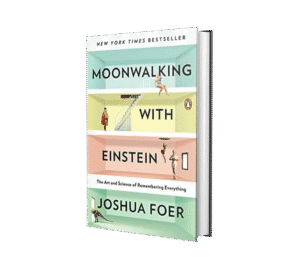
From memory palaces to deliberate practice, Moonwalking with Einstein reveals powerful techniques that turn ordinary minds into extraordinary ones. The book, written by journalist Joshua Foer, follows his unforgettable journey from being an average, often forgetful person to becoming the U.S. Memory Champion in just one year.
Foer didn’t start as a prodigy — he began as a curious reporter attending a memory championship for a story. What followed was a deep exploration into the science of memory, the history of memorization, and the techniques used by top “mental athletes.” His transformation demonstrates a striking idea: memory is not a gift — it’s a skill anyone can train.
The Story Behind the Book
“Moonwalking with Einstein” chronicles Foer’s evolution from an intrigued observer to a competitive memorizer. Through participatory journalism, he documents his interactions with world-class memory champions, neuroscientists, psychologists, and savants. The book blends storytelling, science, and practical instruction, explaining how memory works and how anyone can dramatically improve it.
Foer dives into:
- the structure and limits of human memory
- how ancient Greeks built the first memory systems
- the modern “memory athlete” community
- the neuroscience behind recall
- why our brains crave images, stories, and novelty
Why Our Memory Is Worse Today (and Why It Matters)
One of Foer’s most powerful ideas is that society has offloaded memory to technology — calendars, notes, phones, apps. While convenient, this shift weakens internal memory, creativity, and deep thinking. Foer argues that training memory isn’t just a competitive trick; it’s a meaningful way to strengthen attention, mental discipline, focus, and imagination.
When you rely less on digital tools and more on your mind, you sharpen cognitive skills that influence learning, problem-solving, and even emotional resilience.
Core Memory Techniques Explained
Memory Palace (Method of Loci)
The memory palace is the oldest and most effective mnemonic technique. Foer uses it extensively.
How it works
- Choose a familiar location (your home, office, school).
- Visualize walking through it step by step.
- Assign vivid, strange, funny, or exaggerated mental images to physical “locations” (loci).
- Recall the route and collect each image in order.
Why it works
Humans remember places and images far better than abstract words or numbers. By combining the two, you anchor information into a highly memorable mental space.
Example
To remember a shopping list:
- milk → imagine a cow dancing on your sofa
- eggs → a giant chicken blocking the hallway
- bread → a loaf exploding like fireworks in your kitchen
The stranger the image, the stronger the memory.
Major System
A technique used by memory competitors to memorize large numbers quickly.
Basic rules
Each digit is assigned a sound:
0 = S
1 = T/D
2 = N
3 = M
4 = R
5 = L
6 = J/SH
7 = K/G
8 = F/V
9 = B/P
Combine sounds → form words → create images → place in your memory palace.
Example
34 = M + R = “mirror”
12 = T + N = “tin”
55 = L + L = “lily”
By turning numbers into pictures, memory becomes effortless and fun.
Person-Action-Object (PAO) System
Used for memorizing long sequences such as cards or digits.
How PAO works
- Every person represents a two-digit number
- Every action represents another
- Every object represents a third
Combine them into a story.
Example
34-12-55 becomes:
Einstein (34) lifting (12) a football (55)
This compresses long strings of data into quick, visual scenes that your brain can store with high accuracy.
The Science of Deliberate Practice
Breaking Through the “OK Plateau”
Foer discusses how we hit a plateau in most skills — typing, driving, sports — where progress stops. This is the OK Plateau.
Memory athletes break through it by:
- practicing the hardest techniques
- analyzing errors
- pushing beyond comfort zones
- tracking progress carefully
- focusing conscious attention on improvement
This principle applies to any skill — memory, languages, studying, public speaking, music, business.
Key Takeaways From Moonwalking with Einstein
Memory Is a Trainable Skill
The book proves that with structured techniques and consistent practice, any person can build an extraordinary memory.
Mnemonic Systems Unlock the Brain’s Natural Strengths
Techniques like the memory palace, PAO, and Major System leverage how the brain evolved — to store images, places, stories, and emotional moments.
Novelty + Imagination = Sticky Memories
Unusual, colorful, exaggerated images latch onto your brain like Velcro. The weirder, the better.
Internal Memory Still Matters
Even in a world of smartphones:
- internal memory boosts focus
- improves creativity
- reduces stress
- deepens learning
- enriches personal and professional life
- strengthens long-term cognitive health
Progress Requires Mindful Effort
To improve memory (or anything), you must practice deliberately — focusing on weaknesses rather than repeating what you already do well.
How to Build Your Own Memory Palace: Practical Guide
Step-by-Step Practice
- Choose a familiar location
- Establish a logical route
- Break content into small items
- Convert each item into a vivid image
- Place images along the route
- “Walk” through the palace repeatedly
- Use spaced repetition to reinforce
Tips for Stronger Palaces
- Use bold, funny, bizarre images
- Add emotion (fear, humor, surprise)
- Use multiple senses
- Keep palaces organized
- Create separate palaces for each topic
Benefits
Memory palaces support:
- studying
- presentations
- speeches
- exams
- languages
- numbers
- professional growth
They transform memorization from dry repetition into a creative mental adventure.
Conclusion
Moonwalking with Einstein is more than a book about memory competitions — it’s a powerful reminder that your mind is capable of far more than you think. Foer’s journey shows that with curiosity, practice, and the right techniques, anyone can unlock exceptional cognitive abilities.
If you’d like to explore more topics or to access the required quiz for purchasing your raffle ticket, visit our main Quiz & Studies page.
Quiz
Each study material comes with a short practice quiz at the end. These quizzes are completely optional and designed to help you review what you’ve learned and prepare for the Big Quiz.
💡 Use them to test your knowledge in a fun, low-pressure way – no email or name required.
We’re always improving and updating our content. If you spot anything that seems off, don’t hesitate to reach out – your feedback truly matters to us!
👉 Ready to test yourself? Start the Practice Quiz below:
#1. What does Joshua Foer train to become in the book?
#2. Which technique is NOT discussed in the book?
#3. What does the Memory Palace technique involve?
#4. Who wrote “Moonwalking with Einstein”?
#5. What is a main message of the book?
Results

Boom! Your brain is doing backflips in the memory palace right now. Einstein would be proud! You’ve just moonwalked straight into memory mastery!

Don’t worry, even memory champions forget their keys sometimes… but hey, practice makes permanent!