
Times Square Ball Drop: The World’s Most Iconic New Year’s Eve Celebration
Times Square Ball Drop History: From Iron and Wood to Global Phenomenon (1904–Present)
Every New Year’s Eve, the world looks up — to a 12,000-pound glowing ball made of 2,688 crystals and 32,256 LEDs. What began in 1907 as a newspaper’s solution to a fireworks ban became a billion-viewer tradition — a symbol of time, hope, and humanity counting down together.
The Times Square Ball Drop stands as perhaps the most iconic New Year’s Eve celebration in the world, transforming from a modest 1907 replacement for banned fireworks into a billion-viewer global spectacle that defines how humanity marks the passage from one year to the next. This tradition, born from the vision of newspaper publisher Adolph Ochs and crafted by Ukrainian immigrant metalworker Jacob Starr, has evolved through technological innovations, media transformations, and security adaptations to become both a marvel of engineering and a universal symbol of hope, renewal, and communal celebration.
What began as a simple iron and wood sphere illuminated by 100 incandescent bulbs has grown into a 12,000-pound geodesic wonder covered in 2,688 Waterford crystal triangles and 32,256 LED lights, capable of displaying 16 million colors and watched by over one billion people worldwide each December 31st. The story of the Ball Drop is simultaneously the story of New York City’s rise to global prominence, America’s mastery of mass media, and humanity’s enduring need to mark time’s passage with collective ritual and shared optimism.
The Origins of the Times Square Ball Drop: From Church Bells to Electric Spectacle
New Year’s Eve Traditions Before the Times Square Ball Drop
Before Times Square became synonymous with New Year’s Eve, New Yorkers gathered at Trinity Church in lower Manhattan to hear the church bells “ring out the old, ring in the new” at midnight. This more solemn, religious observance reflected 19th-century American values and the centrality of Christian traditions in public life. The practice of using bells to mark significant moments—from daily prayers to major celebrations—had deep roots in European culture and represented a communal acknowledgment of time’s passage guided by divine order.
The shift from Trinity Church to Times Square reflected broader changes in American urban culture at the turn of the 20th century. As New York grew into a modern metropolis, secular celebrations began to compete with religious observances, and commercial entertainment districts like the nascent Times Square offered new venues for public gathering. The move northward from Trinity Church to what would become the “Crossroads of the World” symbolized America’s transformation from a primarily rural, religious society to an urban, commercial one.
Adolph Ochs and the Creation of the Times Square Ball Drop
Adolph Simon Ochs, born March 12, 1858, in Cincinnati to German-Jewish immigrants, embodied the American dream of the late 19th century. Rising from newspaper delivery boy to owner-publisher of major newspapers, Ochs acquired controlling interest in the financially struggling New York Times in 1896, where he introduced the famous slogan “All the News That’s Fit to Print”. When the newspaper moved its headquarters to the newly constructed Times Tower at the intersection of Broadway and Seventh Avenue in 1904, Ochs saw an opportunity to create a signature event that would draw attention to both his publication and the emerging entertainment district.
The first Times Square New Year’s Eve celebration on December 31, 1904, featured a spectacular fireworks display from the roof of the Times Building, drawing an estimated 200,000 spectators and establishing the location as New York’s premier New Year’s destination. However, the success was short-lived: by 1906, city officials banned the use of fireworks due to safety concerns, forcing Ochs to devise an alternative that would maintain the celebration’s drawing power while complying with municipal regulations.
Jacob Starr and the Maritime Origins of the Times Square Ball Drop
The solution came from an unlikely source: maritime timekeeping traditions that had been used for decades at ports around the world. Jacob Starr, a Ukrainian immigrant and skilled metalworker who worked for the sign-making company Artkraft Strauss (where he would eventually become president), was commissioned by Ochs to create something unprecedented: a massive illuminated time ball that would descend from the Times Building’s flagpole to mark the exact moment of midnight.
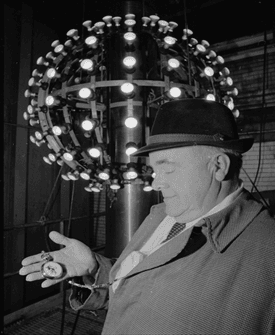
The concept of “time balls” dated to the early 19th century, when observatories and harbors would drop large spheres at predetermined times—typically noon—to allow ship captains to synchronize their navigational chronometers. The Western Union Building near Times Square had operated such a daily time ball for years, providing Ochs and his chief electrician Walter Palmer with a familiar reference point for their midnight celebration. The genius of adapting this maritime tradition to New Year’s Eve lay in its visual drama and precise timing—essential elements for both live spectacle and eventual television broadcasting.
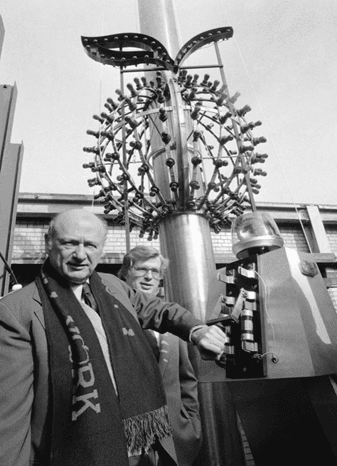
Starr’s first ball, completed for the December 31, 1907 celebration, measured five feet in diameter, weighed 700 pounds, and was constructed of iron and wood illuminated by 100 incandescent light bulbs. The descent mechanism was entirely manual, requiring operators to carefully lower the sphere over the course of exactly one minute, culminating at the stroke of midnight. This inaugural ball drop was an immediate sensation, establishing a tradition that would endure for over a century and spawn countless imitations worldwide.
The Times Square Ball Drop and Its Technological Evolution
Early Times Square Ball Drop Designs and Materials
The original ball served from 1907 to 1920, when it was replaced by a new version made entirely of wrought iron and weighing 400 pounds. This second generation ball reflected both technological improvements in metalworking and lessons learned from thirteen years of operation in harsh winter weather conditions. The iron construction proved more durable than the wood-and-iron hybrid of the original, while the reduced weight made manual operation easier for the crews responsible for the descent.
The 1955 introduction of an aluminum ball weighing just 150 pounds marked another significant advance, coinciding with America’s post-war embrace of modern materials and streamlined design. The aluminum ball’s lighter weight and weather resistance made it practical for year-round installation atop the Times Building, though it lacked the dramatic visual impact of its heavier predecessors. This period also saw the beginning of more sophisticated lighting arrangements, as Broadway’s neon revolution influenced the ball’s illumination design.
The Rhinestone Era and Computer Control
The 1995 renovation represented the ball’s transformation from simple time marker to elaborate multimedia display, incorporating rhinestones, strobe lights, and, for the first time, computer-controlled lighting sequences. This upgrade reflected the influence of Las Vegas showmanship and the growing importance of television coverage in defining the event’s visual style. The computerized system allowed for synchronized light shows that could be programmed in advance and executed with precision impossible under manual control.
The technological sophistication of the 1995 ball also reflected changing audience expectations shaped by decades of television viewing and the emergence of MTV-style visual aesthetics. The static glow of earlier balls gave way to dynamic, pulsing patterns that translated more effectively to television screens and provided visual interest during the long countdown period. This evolution marked the ball’s full transition from functional timekeeper to entertainment spectacle designed primarily for mass media consumption.
The Millennium Times Square Ball Drop and Crystal Design
The approach of the year 2000 provided an opportunity for the most dramatic ball redesign in the tradition’s history. The millennium ball, introduced for the December 31, 1999 celebration, measured six feet in diameter and featured 504 Waterford crystal triangles illuminated from within by colored lights and strobes. This design married traditional craftsmanship—each crystal was hand-cut by Irish artisans—with cutting-edge lighting technology, creating a spectacular display that symbolized the convergence of old and new as the world entered the 21st century.
The Waterford crystal element added layers of meaning to the ball drop celebration. Crystal’s association with clarity, purity, and reflection seemed appropriate for a moment of global renewal, while the Irish craftsmanship connected the American celebration to broader cultural traditions. The decision to make the crystal ball a permanent fixture rather than a one-time millennium special demonstrated the organizers’ recognition that the enhanced spectacle had become integral to the event’s appeal.
The Modern Marvel: LED Revolution and Permanent Installation
The 2007-2008 centennial celebration brought the most sophisticated Times Square Ball Drop in the event’s history: a 12-foot diameter geodesic sphere weighing nearly 12,000 pounds and covered with 2,688 Waterford crystal triangles, each illuminated by cutting-edge LED technology capable of displaying 16 million colors. The 32,256 LEDs represented not just technological advancement but environmental consciousness, consuming significantly less energy than traditional incandescent systems while providing vastly superior visual effects.
The 2008 ball’s permanent installation atop One Times Square marked another crucial evolution: rather than being raised only for the New Year’s Eve celebration, the ball became a year-round tourist attraction and symbol of Times Square itself. This transformation reflected the location’s evolution from newspaper headquarters to global entertainment destination, with the ball serving as both functional celebration centerpiece and permanent landmark drawing visitors from around the world.
The engineering sophistication of the modern ball includes GPS synchronization for precise timing, multiple backup systems for safety, and computer controls capable of creating complex light shows synchronized with music and other multimedia elements. The descent mechanism, while still fundamentally similar to Jacob Starr’s original concept, now operates with computer precision while maintaining manual override capabilities for emergency situations.
How Television Made the Times Square Ball Drop a Global Event
Times Square Ball Drop Before the Television Era
Prior to television, the Times Square Ball Drop was primarily a local New York celebration, with newspaper coverage and radio broadcasts providing limited national exposure. The visual spectacle that made the ball drop compelling was largely lost in radio transmission, relegating out-of-town audiences to basic countdown coverage without the dramatic visual element that made the tradition memorable. This limitation meant that while New Yorkers gathered by the hundreds of thousands in Times Square, the rest of America celebrated New Year’s Eve through local traditions or competing radio programs.
The dominant national New Year’s Eve broadcast from 1929 through the 1970s was bandleader Guy Lombardo’s program from the Waldorf-Astoria Hotel, which featured his Royal Canadians orchestra playing “Auld Lang Syne” and other traditional favorites. Lombardo’s elegant, conservative approach appealed to older audiences but left younger viewers seeking something more contemporary and energetic. This generational gap in New Year’s Eve entertainment created an opportunity for innovation that would fundamentally change how America celebrated the holiday.
Dick Clark and the Rise of the Times Square Ball Drop on Television
Dick Clark, already established as the host of “American Bandstand” and a master at marketing popular music to young audiences, recognized the potential to create a New Year’s Eve broadcast that would combine the visual drama of the Times Square ball drop with contemporary entertainment appealing to youth culture. In 1972, he launched “Dick Clark’s New Year’s Rockin’ Eve” on NBC, initially co-hosted by Three Dog Night and George Carlin, with Clark providing coverage from Times Square.
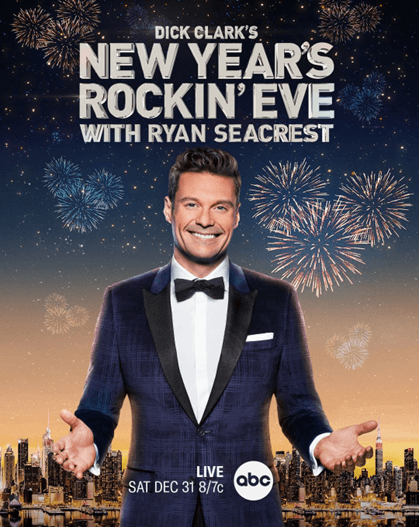
Clark’s innovation was to treat New Year’s Eve as both celebration and concert, featuring popular musical artists alongside the traditional countdown and ball drop coverage. This format acknowledged that television audiences, unlike those physically present in Times Square, needed entertainment during the long evening leading up to midnight, not just the climactic moment itself. By combining Times Square’s visual spectacle with Hollywood’s musical talent, Clark created a new template for holiday television programming.
The program moved to ABC in 1974, where it found its permanent home and began its rise to cultural dominance. Clark’s genius lay in understanding that the Times Square ball drop was inherently televisual—a single, dramatic moment that could serve as the climax for hours of varied entertainment. His annual kiss with his wife Kari at midnight became as much a part of the tradition as the ball drop itself, personalizing the celebration and making Clark synonymous with New Year’s Eve for millions of Americans.
Ryan Seacrest and the Modern Times Square Ball Drop Broadcast
Dick Clark’s 2004 stroke marked a transition period for the broadcast, with Regis Philbin serving as guest host before Ryan Seacrest took over primary hosting duties in 2005. Initially serving as co-host with the recovering Clark, Seacrest demonstrated the charisma and energy necessary to maintain the program’s appeal while respecting its established traditions. Following Clark’s death in 2012, Seacrest became the sole host, ensuring continuity while adapting the format for contemporary audiences.
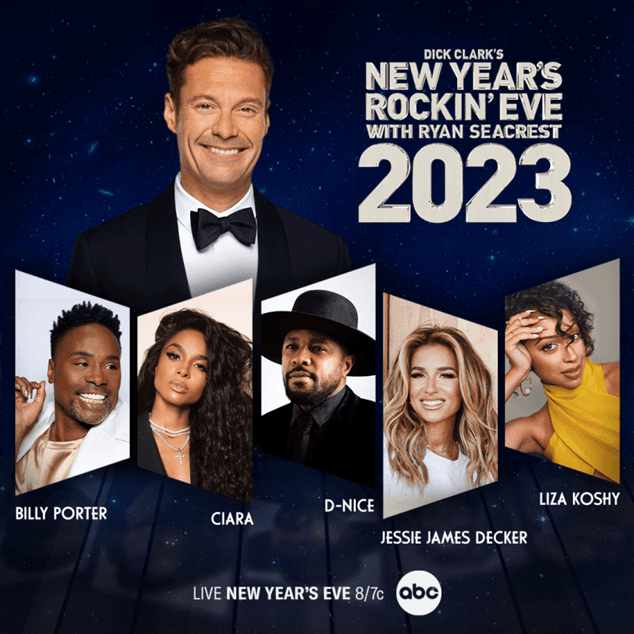
Seacrest’s hosting has coincided with significant technological and cultural changes in television viewing, including the rise of social media, streaming platforms, and global interconnectedness. The modern “Dick Clark’s New Year’s Rockin’ Eve with Ryan Seacrest” incorporates Twitter feeds, Instagram posts, and interactive elements that reflect contemporary audience expectations for participatory media experiences. Despite these technological adaptations, the core format established by Dick Clark remains unchanged: popular music, celebrity appearances, and the climactic Times Square ball drop.
The program’s sustained success—regularly attracting over 20 million American viewers and remaining the highest-rated New Year’s Eve special on television—demonstrates the enduring appeal of Clark’s original concept. The broadcast’s global reach, available in over 100 countries, has made the Times Square ball drop a truly international moment of celebration, watched simultaneously by over one billion people worldwide.
Crowds, Security, and the Human Drama of the Times Square Ball Drop
Experiencing the Times Square Ball Drop in Person
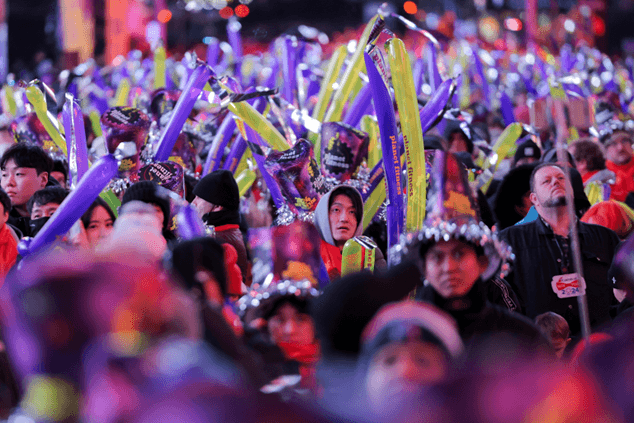
Each December 31st, Times Square transforms from a bustling commercial district into what officials describe as the “crossroads of the planet,” attracting an estimated one million people who endure extraordinary hardships for the privilege of witnessing the ball drop in person. The experience requires physical and emotional commitment that borders on pilgrimage: spectators often arrive before dawn to secure good viewing positions, then stand in densely packed viewing pens for up to 18 hours, frequently in bitter cold, without the ability to leave and return.
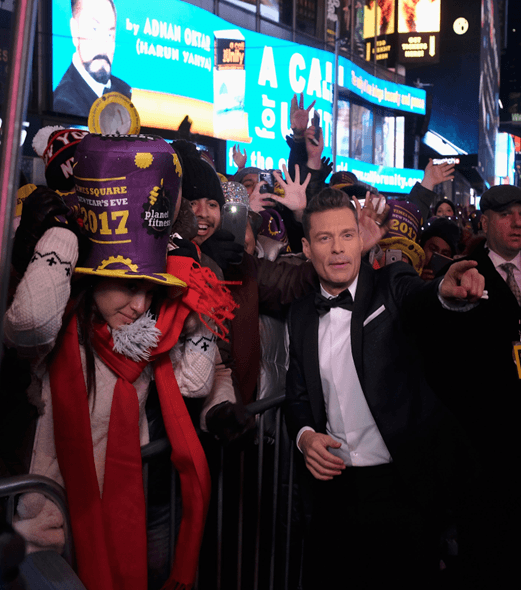
The demographics of Times Square’s New Year’s Eve crowd reflect both American diversity and international tourism, with visitors traveling from every continent to participate in this uniquely American celebration. Surveys indicate that many attendees view the experience as a once-in-a-lifetime event, worth significant expense and discomfort for the opportunity to be part of a globally televised moment. The crowd’s composition includes domestic tourists, international visitors, New York locals, and what security officials describe as “professional revelers”—individuals who attend annually and have developed strategies for maximizing their experience.
The actual viewing experience can be challenging: spectators are confined to designated pens separated by police barriers, cannot bring chairs, umbrellas, or large bags, and must be prepared to stand for hours without access to restrooms or food vendors. Despite these hardships, attendees consistently report high levels of satisfaction, describing the communal energy, global significance, and personal achievement of “being there” as justifying the physical demands.
Security at the Times Square Ball Drop: From Past to Present
The security apparatus surrounding the Times Square Ball Drop has evolved dramatically from the relatively informal crowd control of the early decades to a sophisticated counterterrorism operation involving multiple law enforcement agencies and advanced technology. The transformation began in earnest following the September 11, 2001 attacks, which made any large gathering in New York City a potential security concern, but has accelerated in response to global terrorism threats and specific incidents targeting public celebrations.
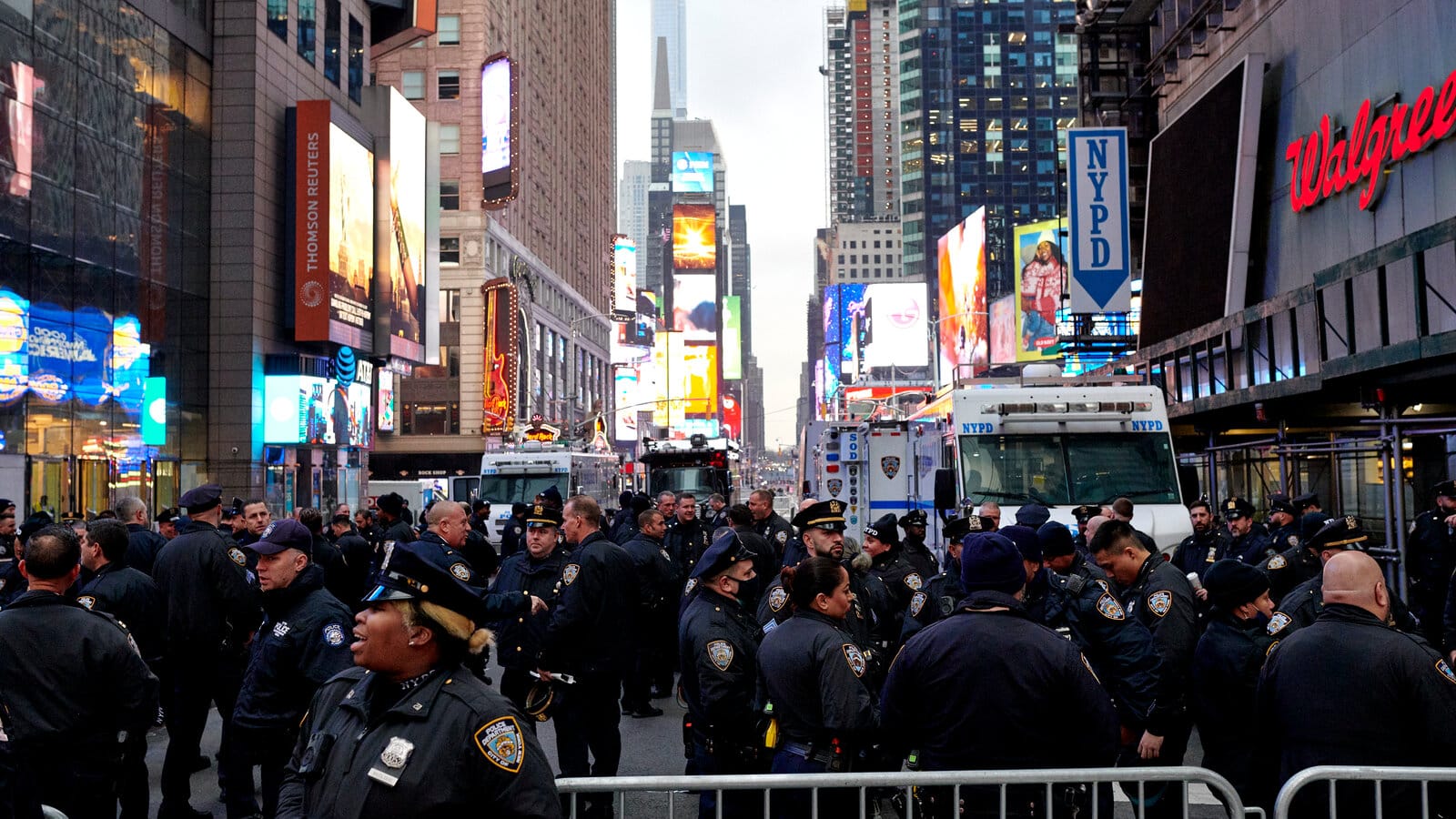
The modern security footprint extends far beyond Times Square itself, with street closures beginning at 4 AM and vehicle restrictions covering a broad area from 39th to 57th Streets between Fifth and Ninth Avenues. The perimeter includes “blocker cars,” sand-filled trucks, and concrete barriers designed to prevent vehicle attacks, while metal detectors and bag searches screen all attendees entering the viewing areas. Police Commissioner Jessica Tisch’s description of the security operation as involving “thousands of officers, both uniformed and plainclothes, heavy weapons teams, canine units, mounted police, aviation units, and harbor units” illustrates the event’s classification as a major security challenge requiring resources typically reserved for heads-of-state visits.
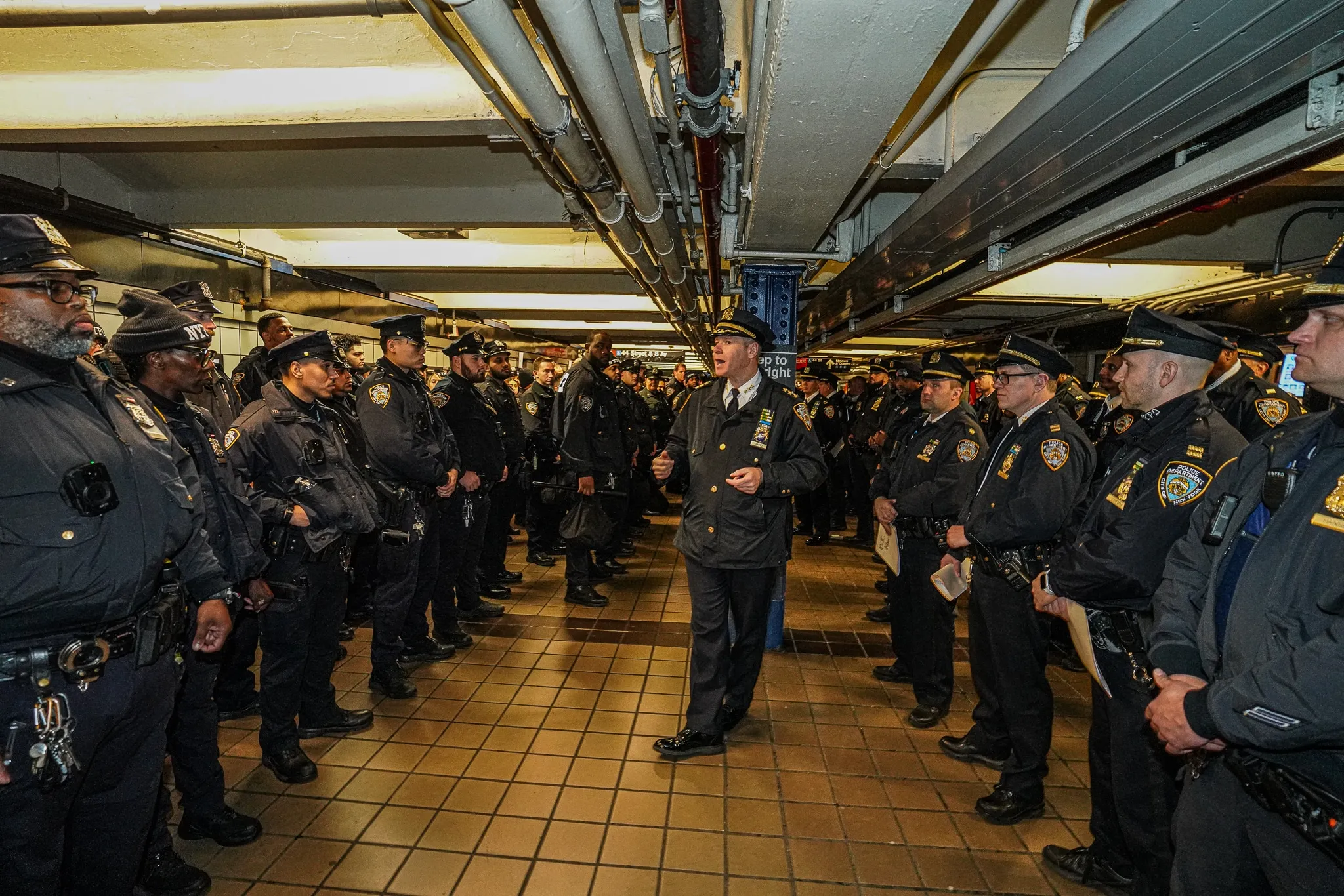
The expansion of security measures following various global terrorism threats demonstrates how such concerns continue to shape the celebration’s security posture. The current protocol includes drone surveillance, rooftop snipers, intelligence officers monitoring social media, and specialized teams focused on pickpocket prevention—illustrating how a celebration of joy and renewal has necessarily become a demonstration of security technology and law enforcement coordination.
Crowd Psychology at the Times Square Ball Drop
The Times Square New Year’s Eve crowd represents one of the densest human gatherings in the world, with crowd scientists estimating densities that approach the limits of safe human congregation. Unlike typical crowd situations where people can move freely, Times Square revelers are confined to specific viewing areas for hours, creating unique psychological and social dynamics that researchers have studied extensively.
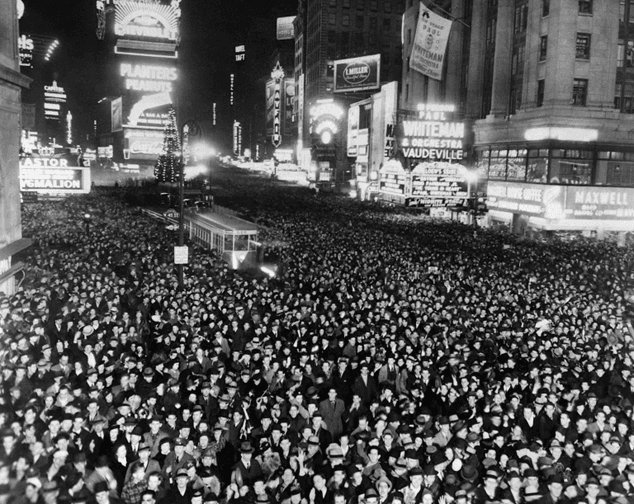
The communal countdown represents a rare moment of synchronized global human behavior, with television audiences and in-person attendees participating in the same ritual simultaneously. Sociologists have noted that the ball drop serves as a secular ritual providing the same social functions as religious ceremonies: community bonding, shared meaning-making, and collective acknowledgment of temporal transitions. The tradition of kissing at midnight, singing “Auld Lang Syne,” and making New Year’s resolutions connects individual participants to broader cultural practices while creating intensely personal memories.
The phenomenon of “temporal synchronization”—the precise moment when millions of people worldwide experience the same event simultaneously—represents one of the most widely shared human experiences in history. Television and internet broadcasting technology enable this global simultaneity, making the Times Square ball drop a unifying moment across cultural, national, and linguistic boundaries.
The Global Cultural Impact of the Times Square Ball Drop
The Americanization of New Year’s Eve
The Times Square Ball Drop has fundamentally transformed how the world celebrates New Year’s Eve, establishing an American template that has been adopted and adapted by cities worldwide. Before the television era, New Year’s celebrations varied significantly by culture and location, often emphasizing religious observance, family gatherings, or local traditions. The global broadcasting of Times Square’s celebration has created expectations for public spectacle, celebrity entertainment, and precise midnight countdowns that have influenced celebration formats from London to Tokyo.
The export of American New Year’s Eve traditions through television has created what cultural scholars describe as “temporal imperialism”—the dominance of American time zones and celebration styles in defining global New Year’s experience. While Sydney, London, and other cities have developed their own signature celebrations, the Times Square format of countdown, ball drop (or equivalent), and celebrity performances has become the international standard. This cultural influence extends beyond entertainment to commercial considerations, as cities worldwide invest in New Year’s Eve spectacles to attract tourism and international media attention.
Economic and Tourism Impact of the Times Square Ball Drop
The Times Square Ball Drop generates significant economic activity for New York City, with estimates suggesting that New Year’s Eve celebrations contribute over $100 million annually to the local economy through hotel bookings, restaurant revenues, retail spending, and tourism-related services. The event’s global television coverage provides New York City with invaluable marketing exposure, showcasing the city to over one billion viewers worldwide and reinforcing its status as a premier international destination.
The celebration has spawned a substantial tourism industry built around New Year’s Eve travel packages, with hotels in the Times Square area commanding premium rates and booking months in advance. Restaurants offer special New Year’s Eve menus and viewing parties, while retailers stock Times Square-themed merchandise and souvenirs. The economic impact extends beyond December 31st, as many visitors extend their stays to explore other New York attractions, contributing to the city’s year-round tourism industry.
The event’s branding opportunities have created additional revenue streams through corporate sponsorships, official merchandise, and licensing agreements. The ball itself has become a brand symbol used on everything from t-shirts to snow globes, while corporate sponsors pay substantial fees for association with the celebration’s global reach and positive messaging.
Technological Innovation and Global Broadcasting
The Times Square Ball Drop has served as a testing ground for broadcasting technology, from the early days of live television to contemporary digital streaming and social media integration. The technical challenges of broadcasting live from an outdoor location in challenging winter weather conditions have driven innovations in camera technology, signal transmission, and satellite communication that have benefited the entire television industry.
The event’s global reach has required sophisticated coordination of international broadcasting rights, satellite feeds, and multi-language commentary, making it one of the most complex live television productions in the world. The integration of social media elements, real-time audience participation, and interactive features has made the broadcast a pioneer in multimedia entertainment that bridges traditional television with digital platforms.
The ball drop’s precise timing requirements—coordinated to GPS and atomic clock signals—have contributed to advances in broadcast synchronization technology that ensure viewers worldwide experience the countdown simultaneously despite transmission delays and time zone differences. This technological precision has made the Times Square celebration a benchmark for other live global events requiring exact timing coordination.
The Future of the Times Square Ball Drop: Challenges and Evolution
Climate Change and Outdoor Celebrations
The Times Square Ball Drop faces increasing challenges from climate change, with more frequent extreme weather events creating safety and logistical concerns for the massive outdoor celebration. Recent celebrations have faced significant rain, dangerous cold, ice storms, and high winds that complicate crowd safety and television production. Event organizers have developed extensive weather contingency plans, but the fundamental outdoor nature of the celebration limits adaptation options.
The carbon footprint of the celebration—including energy consumption, transportation emissions from one million attendees, and global television broadcasting—has drawn attention from environmental activists who question the sustainability of such large-scale events. The LED conversion of the ball’s lighting system represents one response to these concerns, dramatically reducing energy consumption while maintaining visual impact. However, broader questions about the environmental cost of mass tourism and global broadcasting remain unresolved.
Digital Media and Changing Audience Expectations
The rise of streaming platforms, social media, and on-demand entertainment has challenged traditional television viewing patterns, potentially affecting the Times Square Ball Drop’s audience reach and cultural relevance. Younger viewers increasingly expect interactive, customizable viewing experiences that traditional live broadcasts struggle to provide. The integration of Twitter feeds, Instagram posts, and other social media elements represents an attempt to adapt to these changing expectations.
The proliferation of alternative New Year’s Eve entertainment options—from streaming concerts to virtual reality experiences—has created competition for audience attention that didn’t exist in the Dick Clark era. Maintaining the celebration’s cultural centrality requires continuous innovation in presentation while preserving the traditional elements that define the experience.
Security and Privacy Concerns of the Times Square Ball Drop
The extensive security measures required for the Times Square celebration raise ongoing questions about privacy, freedom of assembly, and the balance between safety and accessibility. The use of facial recognition technology, digital surveillance, and extensive personal screening has transformed the celebration from an open public gathering to a secured event requiring advance planning and background checks.
The potential for terrorist attacks or other security incidents continues to shape event planning, with security costs representing an increasing portion of the celebration’s overall budget. The challenge of maintaining the event’s welcoming, celebratory atmosphere while implementing necessary security measures remains an ongoing balancing act for organizers.
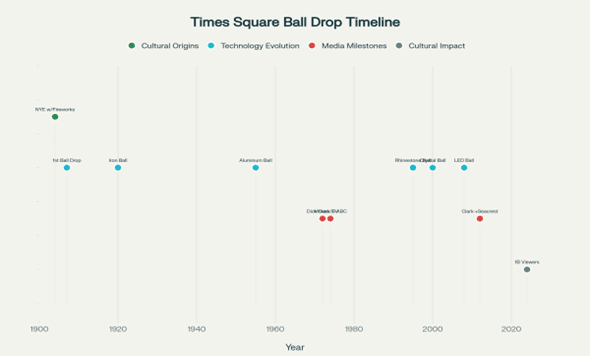
Timeline of Times Square Ball Drop Evolution
| Year | Event | Significance |
| 1904 | First Times Square NYE celebration with fireworks | Establishes Times Square as premier New Year location |
| 1907 | First ball drop designed by Jacob Starr | Creates enduring tradition, iron/wood, 700 lbs, 100 bulbs |
| 1920 | Second generation wrought iron ball | Improved durability, 400 lbs |
| 1942-1943 | Ball drop suspended during WWII | Only interruption in tradition due to wartime blackouts |
| 1955 | Aluminum ball introduced | Modernization, 150 lbs, improved weather resistance |
| 1972 | “Dick Clark’s New Year’s Rockin’ Eve” debuts | Television transforms celebration into national/global event |
| 1974 | Program moves to ABC | Establishes permanent broadcast home |
| 1995 | Rhinestone ball with computer controls | Entertainment spectacle era begins |
| 2000 | Millennium ball with Waterford crystal | Marks new century, introduces crystal element |
| 2004 | Dick Clark suffers stroke | Transition period begins |
| 2005 | Ryan Seacrest becomes co-host | New generation of hosting begins |
| 2007-2008 | Modern LED ball debuts | Current ball: 12 feet, 12,000 lbs, 32,256 LEDs, 2,688 crystals |
| 2012 | Dick Clark dies | End of founding television era |
| Present | Over 1 billion global viewers | World’s most-watched New Year celebration |
Conclusion: The Eternal Countdown
The Times Square Ball Drop endures as more than entertainment or tradition—it represents humanity’s collective need to mark time’s passage with shared ritual, communal hope, and synchronized celebration. From Jacob Starr’s iron and wood sphere to today’s LED-illuminated crystal geodesic wonder, the ball itself symbolizes technological progress while serving an essentially timeless function: providing a focal point for global renewal and optimism.
The tradition’s evolution from local New York celebration to global phenomenon illustrates the power of American popular culture and mass media to create shared experiences that transcend national and cultural boundaries. Yet its enduring appeal lies not in its American origins but in its universal themes: the hope for better times ahead, the comfort of communal celebration, and the human need to believe that midnight on December 31st offers genuine opportunities for personal and collective transformation.
As the world becomes increasingly divided by political, religious, and cultural conflicts, the Times Square Ball Drop remains one of the few truly global moments when humanity celebrates together. The sight of that glowing sphere descending through the cold December night—watched simultaneously by street crowds in Times Square and television audiences worldwide—continues to provide what Adolph Ochs originally intended: a spectacle worthy of the world’s attention and a symbol of hope as bright as the lights that illuminate it.
The countdown continues, the ball still drops, and each New Year’s Eve proves that some traditions transcend their origins to become essential elements of human culture, marking time’s passage while timeless in their appeal.
If you’d like to explore more topics or to access the required quiz for purchasing your raffle ticket, visit our main Quiz & Studies page.
Quiz
Each study material comes with a short practice quiz at the end. These quizzes are completely optional and designed to help you review what you’ve learned and prepare for the Big Quiz.
💡 Use them to test your knowledge in a fun, low-pressure way – no email or name required.
We’re always improving and updating our content. If you spot anything that seems off, don’t hesitate to reach out – your feedback truly matters to us!
👉 Ready to test yourself? Start the Practice Quiz below:
#1. Who commissioned the first Times Square Ball Drop and in what year did it debut?
#2. Approximately how many people attend the Times Square Ball Drop in person each year?
#3. When did “Dick Clark’s New Year’s Rockin’ Eve” first air and on which network?
#4. How much does the current LED ball weigh and what is its diameter?
#5. What maritime tradition inspired the creation of the Times Square Ball Drop?
Results

You’re shining brighter than Times Square at midnight! You really know your New Year history — from iron and wood to LED and crystal, you’ve got it covered. Keep that energy going — every bit of knowledge lights up the next countdown.

So close! Don’t drop the ball just yet. Take another glance through the story — remember, it all started in 1907, inspired by the sea and watched by millions. Try again — your next countdown will be a winning one.