
1984 (Nineteen Eighty-Four) by George Orwell: From Spanish Trenches to Digital Dystopia
1984 by George Orwell, also known as Nineteen Eighty-Four, stands as perhaps the most prescient and influential dystopian novel of the 20th century, transforming from a dying man’s final literary work into a universal touchstone for understanding totalitarian control and the erosion of individual freedom. Written in 1948 on the remote Scottish island of Jura while George Orwell battled the tuberculosis that would claim his life just seven months after publication, this haunting vision of a world dominated by perpetual surveillance, historical manipulation, and thought control has transcended its origins as Cold War fiction to become an indispensable guide to recognizing authoritarian tendencies in any era.
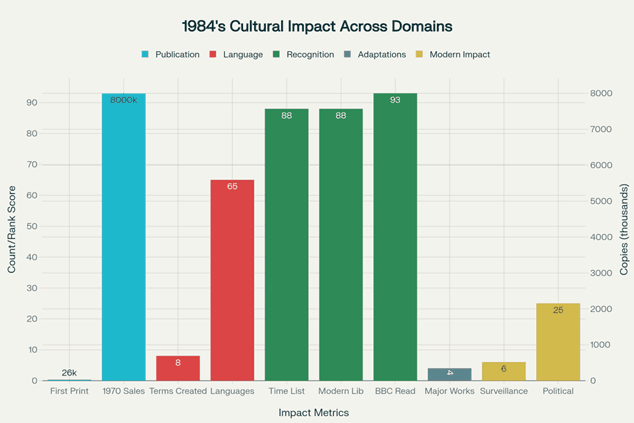
The novel’s extraordinary cultural impact is evidenced not merely by its commercial success—over 8 million copies sold by 1970 and consistently ranking among the greatest English-language novels—but by its profound linguistic legacy, with terms like “Big Brother,” “doublethink,” “thoughtcrime,” and “Orwellian” becoming essential vocabulary for describing modern threats to democracy and privacy. Born from Orwell’s direct experiences of totalitarian brutality during the Spanish Civil War and refined through his wartime work creating propaganda for the BBC, Nineteen Eighty-Four represents both a personal reckoning with the seductive power of authoritarianism and a universal warning that remains chillingly relevant in our age of digital surveillance, social media manipulation, and the systematic erosion of objective truth.
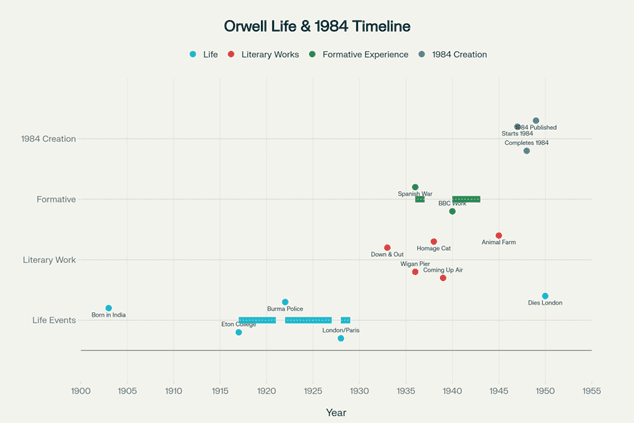
George Orwell’s Journey from Eric Blair to Literary Icon (1903–1950)
Imperial Origins and Educational Foundations
Eric Arthur Blair was born on June 25, 1903, in Motihari, Bengal, British India, the son of Richard Walmsley Blair, a colonial civil servant working in the Opium Department, and Ida Mabel Blair. This imperial background would prove crucial to George Orwell’s later political development, exposing him from birth to the machinery of colonial control that would inform his lifelong antipathy toward authoritarian systems. When Eric was one year old, his mother brought him and his older sister Marjorie to England, leaving his father behind to continue his colonial service—a separation that introduced young Eric to themes of distance, authority, and institutional loyalty that would later permeate his work.
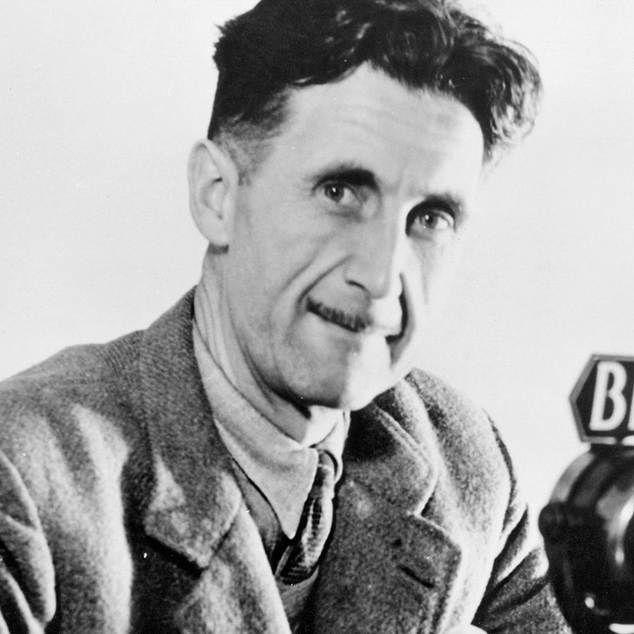
Eric’s education at Eton College from 1917 to 1921 placed him among Britain’s future ruling class, yet rather than embracing his privileged position, he developed a critical perspective on the elite institutions designed to perpetuate imperial power. At Eton, he displayed the intellectual independence and skepticism toward authority that would characterize his entire life, earning a reputation as a brilliant but contrarian student who questioned received wisdom. His academic performance, while respectable, reflected his growing discomfort with the expectations placed upon him by his class and background.
The Burmese Experience: Witnessing Imperial Brutality
After leaving Eton, Eric Blair chose to follow his father into colonial service, joining the Indian Imperial Police in Burma in 1922. This decision to enter the machinery of imperial control would prove transformative, providing him with firsthand experience of the violence and moral compromise inherent in maintaining colonial rule. For five years, Blair served in various postings across Burma, witnessing and participating in the systematic oppression that maintained British authority over the colonized population.
The psychological impact of his Burma service cannot be overstated. Blair later described this period as profoundly demoralizing, forcing him to confront the gap between imperial rhetoric about civilization and progress and the brutal reality of colonial administration. He witnessed floggings, executions, and the casual racism that characterized British rule, experiences that would later find expression in his essay “Shooting an Elephant” and his novel Burmese Days. The moral distress of serving as an instrument of oppression while recognizing its fundamental injustice created the psychological foundation for his later literary exploration of power, control, and the corruption of authority.
By 1927, Blair’s disillusionment had reached a crisis point. He returned to England on leave and made the dramatic decision to resign from the Imperial Police, abandoning a secure career and disappointing his family’s expectations. This act of rebellion against the path prescribed for him by class and background marked his transformation from Eric Blair, imperial servant, into George Orwell, critic of power and defender of human dignity.
The Spanish Crucible: Birth of a Political Writer
While Blair’s experiences in Burma had taught him to distrust imperial authority, it was his involvement in the Spanish Civil War from 1936 to 1937 that crystallized his understanding of totalitarian methods and provided the specific insights that would shape Nineteen Eighty-Four. Initially traveling to Spain as a journalist to report on the conflict, George Orwell instead decided to join the fight against fascism, enlisting with the Workers’ Party of Marxist Unification (POUM), an anti-Stalinist communist group.
For six months, George Orwell served on the Aragon front, experiencing the physical hardships, boredom, and occasional terror of trench warfare. However, it was his experiences during the Barcelona May Days of 1937 that would prove most significant for his later literary work. When Stalinist forces turned against their former anti-fascist allies, George Orwell witnessed firsthand the mechanisms of political betrayal, historical revision, and ideological purging that would later appear in Nineteen Eighty-Four.
The specific events that traumatized George Orwell occurred when Communist forces, following orders from Moscow, attacked the anarchist and POUM militias with whom George Orwell had been fighting. Suddenly, former comrades became enemies, and the narrative of the war was systematically rewritten to justify this betrayal. George Orwell watched as newspapers controlled by the Communists declared the POUM to be a fascist organization in disguise, despite having fought alongside these same fighters against Franco’s forces. The speed and thoroughness with which history was revised to serve political ends would later inspire the Ministry of Truth’s work in rewriting the past.
Most alarmingly for George Orwell, he discovered that his own life was in danger from the very forces that claimed to be fighting fascism. Hunted by Communist secret police who viewed him as politically unreliable, George Orwell and his wife Eileen were forced to flee Spain under threat of arrest and execution. This experience of being branded a traitor by his own supposed allies, of witnessing the transformation of comrades into enemies through ideological manipulation, provided George Orwell with intimate knowledge of how totalitarian movements maintain power through betrayal, surveillance, and the constant revision of truth.
Historical Context: Writing 1984 in the Shadow of Total War
The Post-War Landscape: 1948 and the Birth of the Cold War
George Orwell began writing Nineteen Eighty-Four in 1947 and completed it in 1948, a period when the optimism of Allied victory in World War II was giving way to the grim realities of the emerging Cold War. The wartime alliance between the Western democracies and the Soviet Union had already collapsed into mutual suspicion and proxy conflicts, creating exactly the kind of perpetual warfare between shifting alliances that George Orwell would describe in his novel.
The historical moment was crucial to the book’s conception. The Yalta and Potsdam conferences had effectively divided Europe into spheres of influence, with Stalin’s Soviet Union dominating Eastern Europe while the United States and Britain controlled the West. This division of the world into competing ideological blocs provided George Orwell with the template for his three superstates of Oceania, Eurasia, and Eastasia, locked in endless warfare and shifting alliances.
George Orwell was writing at a time when the full extent of Nazi and Soviet atrocities was becoming clear to the Western public. The liberation of Nazi concentration camps had revealed the systematic industrialization of murder, while reports from Eastern Europe documented Stalin’s brutal purges and the establishment of communist dictatorships. These revelations about the capacity of modern states to control and destroy human life on an unprecedented scale deeply influenced Orwell’s vision of totalitarian power.
Technological Fears: The Atomic Age and Mass Media
The atomic bombings of Hiroshima and Nagasaki in August 1945 had demonstrated the terrifying power of modern weapons to destroy entire cities instantaneously. George Orwell recognized that atomic weapons would fundamentally alter the nature of international relations, creating a situation where major powers might prefer perpetual low-level conflict to risking nuclear annihilation. This insight directly informed his conception of the permanent warfare between superstates in Nineteen Eighty-Four.
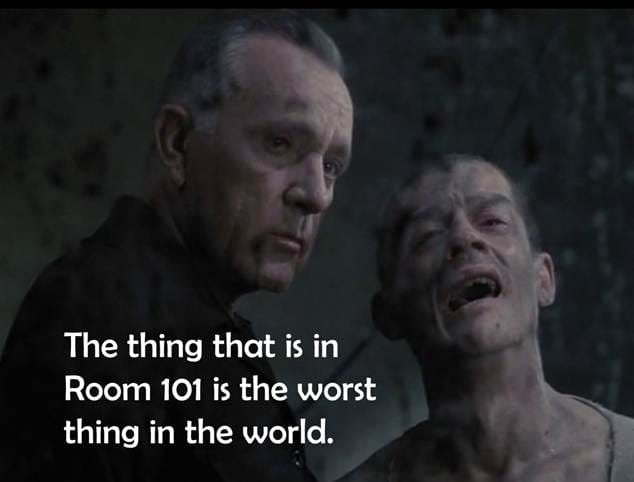
Equally important was George Orwell’s recognition of how modern mass media could be used to manipulate public opinion. His own work during World War II creating propaganda for the BBC had given him intimate knowledge of how information could be shaped, selected, and presented to serve political ends. The room at the BBC where George Orwell worked during the war was numbered 101—a detail he would later incorporate into his novel as the number of the room where Winston Smith faces his worst fears.
The wartime experience of rationing, shortages, and constant government surveillance had also normalized many of the conditions that George Orwell would extrapolate into his dystopian future. Britons had lived for years under conditions of food rationing, blackouts, and restrictions on movement and communication. The infrastructure of control developed for the war effort demonstrated how quickly democratic societies could adopt authoritarian methods when faced with existential threats.
Personal Circumstances: Writing While Dying
George Orwell’s physical condition during the writing of Nineteen Eighty-Four profoundly influenced both the book’s creation and its bleak vision. Suffering from tuberculosis, he retreated to the remote Scottish island of Jura in 1947, seeking clean air and isolation to complete what he sensed might be his final work. The harsh conditions on Jura—cold, damp, and isolated from medical care—paradoxically both worsened his health and provided the austere environment that matched his novel’s grim vision.
Writing in longhand because typing had become too difficult, George Orwell worked with the urgency of a man racing against death. This sense of urgency infused the novel with an intensity and desperation that reflected not only Winston Smith’s situation but George Orwell’s own race to complete his warning about the future of human freedom. He later described the book as “a beastly book” and expressed disappointment that illness had prevented him from making it better, yet this dissatisfaction was typical of his perfectionist approach to his craft.
The isolation of Jura also contributed to the novel’s atmosphere of loneliness and paranoia. Cut off from London’s literary society and dependent on unreliable communication with the outside world, George Orwell was living a version of the isolation he was creating for Winston Smith. This personal experience of separation from human connection informed the novel’s exploration of how totalitarian systems destroy the bonds between individuals.
The Creation and Publication of Nineteen Eighty-Four
Conception and Writing Process
The idea for Nineteen Eighty-Four had been germinating in George Orwell’s mind since his Spanish Civil War experiences, but the specific impetus for writing it came from his growing concern about the direction of post-war politics. Initially considering the title “The Last Man in Europe,” Orwell ultimately chose “1984” as a simple transposition of the year he completed the manuscript, 1948, suggesting that his dystopian world was not distant future fantasy but a plausible extrapolation of contemporary trends.
George Orwell’s working method was meticulous and exhausting. Despite his declining health, he maintained a disciplined writing schedule, working for several hours each morning when his energy was highest. He wrote the entire manuscript by hand, then painstakingly typed a final version, a physical ordeal that further weakened his already fragile condition. His notebooks from this period reveal the care with which he developed the novel’s internal consistency, creating detailed notes about Newspeak grammar, the geography of Oceania, and the biographical details of his characters.
The novel’s structure reflects George Orwell’s careful planning. He divided the work into three sections that mirror Winston Smith’s journey from doubt through rebellion to final capitulation, with each section exploring different aspects of totalitarian control. The inclusion of Emmanuel Goldstein’s theoretical work “The Theory and Practice of Oligarchical Collectivism” within the novel allowed George Orwell to present his analysis of how totalitarian systems function while maintaining the narrative focus on Winston’s personal experience.
Publication and Initial Reception
Nineteen Eighty-Four was published by Secker & Warburg in London on June 8, 1949, with an initial print run of 25,575 copies. Despite George Orwell’s modest prediction of earnings around £500, the book was an immediate success, requiring additional print runs of 5,000 copies in both March and August 1950. The American edition, published by Harcourt Brace on June 13, 1949, was even more successful, with an initial printing of 20,000 copies followed by additional runs of 10,000 copies in July and September.
The critical reception was overwhelmingly positive, though some reviewers struggled to categorize the work. V.S. Pritchett’s review in the New Statesman captured the general response: “I do not think I have ever read a novel more frightening and depressing; and yet, such are the originality, the suspense, the speed of writing and withering indignation that it is impossible to put the book down”. Bertrand Russell, E.M. Forster, and Harold Nicolson all praised the work, recognizing its importance as both literature and political warning.
However, some critics dismissed the novel as excessively pessimistic. Edward Shanks wrote in The Sunday Times that it “breaks all records for gloomy vaticination,” while C.S. Lewis criticized the relationship between Winston and Julia as lacking credibility. More significantly, some American reviewers interpreted the book as an attack on British socialism under Clement Attlee rather than a universal warning about totalitarian tendencies.
George Orwell was sufficiently concerned about these misinterpretations that he issued a clarifying statement from his hospital bed, emphasizing that the novel was not prophecy but analysis of what could happen based on existing political trends. He specifically warned that the danger lay “in the structure imposed on Socialist and on liberal capitalist communities by the necessity to prepare for total war” and stressed that totalitarian thinking could emerge from intellectuals “of all colours”.
Literary Analysis: The Architecture of Totalitarian Control
Winston Smith: The Last Man in Europe
Winston Smith, the novel’s protagonist, embodies both the potential for human resistance and its ultimate fragility in the face of total power. At 39 years old, Winston belongs to the generation with dim childhood memories of the world before the Party’s rise, making him uniquely positioned to recognize the falseness of the Party’s version of history. His work at the Ministry of Truth, where he rewrites historical records to conform to the Party’s current needs, gives him intimate knowledge of how the Party maintains its control through the manipulation of truth.
George Orwell carefully constructs Winston as an everyman hero—physically weak, intellectually curious, and morally conflicted. His varicose ulcer, his thin hair, and his general air of defeated middle age make him an unlikely rebel, which serves George Orwell’s purpose of showing that the impulse toward freedom exists even in the most unpromising circumstances. Winston’s initial acts of rebellion—keeping a diary, seeking human connection, trying to remember the past—are modest gestures that most people in free societies would consider routine, highlighting how thoroughly the Party has circumscribed human experience.
The progression of Winston’s character through the novel follows the classic pattern of a tragic hero: initial doubt leads to conscious rebellion, which brings temporary fulfillment before culminating in catastrophic defeat. However, George Orwell’s innovation is to extend the narrative beyond Winston’s physical defeat to explore his psychological destruction. The Winston who declares his love for Big Brother at the novel’s end is not the same character who began the journey; he has been fundamentally altered at the level of consciousness itself.
Julia: Rebellion Through Sexuality and Pragmatism
Julia represents a different form of resistance to the Party’s control, one that is more instinctive and less intellectual than Winston’s rebellion. At 26, she has no memories of the pre-Party world, yet her rebellion is in some ways more fundamental than Winston’s because it arises from her essential vitality rather than from historical knowledge. Her sexuality becomes a direct challenge to the Party’s attempt to control human reproduction and eliminate pleasure for its own sake.
The contrast between Julia and Winston reveals different modes of resistance under totalitarianism. Where Winston seeks to understand the system and change it, Julia seeks to evade it and survive within it. Her affairs with multiple Party members demonstrate a pragmatic approach to rebellion that focuses on personal satisfaction rather than systemic change. This difference in approach creates both the attraction between them and the ultimate limitation of their relationship.
Julia’s fate parallels Winston’s but with important differences. While both are ultimately broken by the Party’s torture, Julia’s betrayal of Winston seems to come more easily than his betrayal of her, suggesting that her less idealistic approach to rebellion may paradoxically make her more susceptible to the Party’s corrupting influence. Her final meeting with Winston reveals that she, too, has been fundamentally changed, but her transformation seems more complete and less tormented than his.
O’Brien: The Seductive Face of Totalitarian Authority
O’Brien represents the most complex and terrifying antagonist in dystopian literature—a cultured, intelligent tormentor who combines genuine insight with absolute commitment to the system he serves. His role as Winston’s torturer is particularly effective because he appears to understand and even sympathize with his victim’s motivations while remaining utterly committed to destroying them.
The relationship between O’Brien and Winston forms the novel’s central exploration of power and submission. O’Brien’s famous declaration that “the object of power is power” distills the novel’s analysis of totalitarian motivation to its essence. Unlike earlier forms of tyranny that sought power as a means to other ends, the totalitarian state that O’Brien represents seeks power as an end in itself.
O’Brien’s intellectual sophistication makes him particularly dangerous. He can articulate the Party’s methods and goals with philosophical precision, explaining how the Party maintains its control through the manipulation of reality itself. His ability to make Winston believe that 2+2=5 represents the ultimate triumph of power over truth, demonstrating that totalitarian control extends beyond external behavior to encompass the very structures of thought.
Key Themes and Symbols in Nineteen Eighty-Four
The Nature of Truth and Reality
One of Nineteen Eighty-Four’s most profound contributions to political thought is its exploration of how totalitarian systems maintain control through the manipulation of truth and reality. The Party’s slogan “Who controls the past controls the future; who controls the present controls the past” encapsulates this strategy of maintaining power through the systematic revision of history. Winston’s work at the Ministry of Truth provides concrete examples of how this process operates, showing readers the mundane bureaucratic procedures by which truth is manufactured and revised.
The concept of doublethink—holding two contradictory beliefs simultaneously while believing both to be true—represents George Orwell’s insight into how totalitarian ideology functions. Rather than requiring subjects to believe obvious falsehoods, successful totalitarian systems train people to maintain contradictory beliefs without recognizing the contradiction. This psychological mechanism allows the system to maintain flexibility while preventing subjects from achieving the intellectual consistency that might lead to rebellion.
The novel’s most famous example of this manipulation—forcing Winston to accept that 2+2=5—demonstrates how totalitarian power ultimately seeks to control not just behavior but consciousness itself. The Party’s victory is complete only when it has eliminated the possibility of objective truth, making rebellion literally unthinkable because the mental categories necessary for resistance have been eliminated.
Language as an Instrument of Control
George Orwell’s creation of Newspeak represents one of the most original and influential aspects of Nineteen Eighty-Four, demonstrating how language can be systematically degraded to prevent dangerous thoughts. The principle behind Newspeak is that if the words necessary to express a concept do not exist, the concept itself becomes unthinkable. By systematically reducing vocabulary and eliminating words with subversive connotations, the Party aims to make rebellion literally impossible.
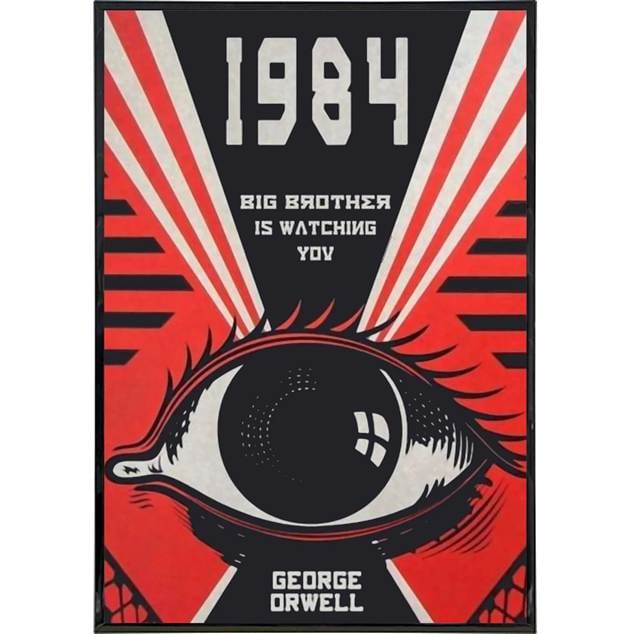
The linguistic innovation of Newspeak extends beyond simple vocabulary reduction to encompass the creation of compound words that obscure meaning rather than clarify it. Terms like “doublethink,” “thoughtcrime,” and “bellyfeel” compress complex concepts into simple formulations that discourage analysis. The effect is to create a language that appears to communicate while actually preventing real thought.
George Orwell’s analysis of language manipulation has proved remarkably prescient, anticipating contemporary concerns about how political language is used to obscure rather than illuminate meaning. The tendency to create euphemisms for unpleasant realities, to compress complex issues into simple slogans, and to use language as a weapon rather than a tool for understanding are all recognizable features of modern political discourse that George Orwell identified and warned against.
Surveillance and the Destruction of Privacy
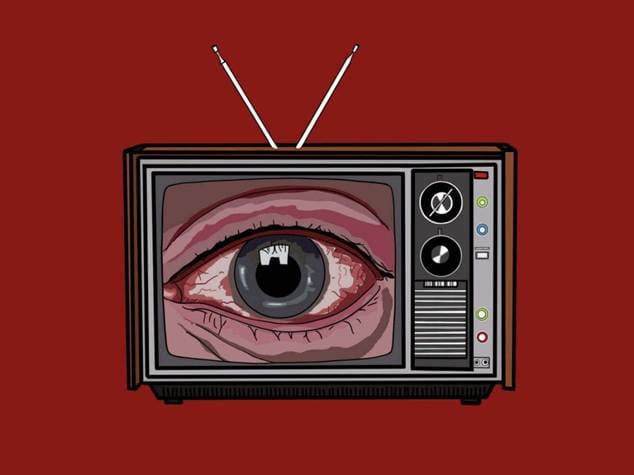
The omnipresent telescreens that monitor every aspect of citizens’ lives represent George Orwell’s most visually striking symbol of totalitarian control. These two-way television screens that cannot be turned off serve both to broadcast Party propaganda and to monitor citizens’ behavior for signs of disloyalty. The psychological effect of constant potential surveillance is to make citizens monitor their own behavior, creating what Michel Foucault would later call the “panopticon effect”.

The uncertainty of surveillance—never knowing whether one is being watched at any given moment—proves more effective than certain observation because it forces subjects to assume they are always being monitored. This creates a state of permanent self-censorship that extends beyond behavior to encompass facial expressions and even unconscious gestures that might betray forbidden thoughts.

The destruction of privacy serves not only to prevent organized resistance but to eliminate the psychological space necessary for individual thought and feeling. By making private experience impossible, the Party ensures that all human energy is channeled into approved collective activities rather than dangerous individual reflection. The novel’s prophetic vision of surveillance technology has become increasingly relevant in an era of digital monitoring and data collection.
The Manipulation of History and Memory
The Party’s systematic revision of historical records serves multiple functions in maintaining its control over society. By constantly rewriting the past to conform to current political needs, the Party eliminates the possibility of using historical knowledge to critique present conditions. Citizens cannot judge the Party’s performance because they have no reliable information about previous conditions or alternative systems.
The memory hole—the mechanism by which inconvenient documents are destroyed—symbolizes the deliberate erasure of evidence that might contradict the Party’s current version of truth. Winston’s work feeding documents into the memory hole provides readers with a visceral image of how totalitarian systems maintain control through the systematic destruction of evidence.
The manipulation of memory extends beyond official records to encompass the psychological manipulation of individual consciousness. The Party’s ultimate goal is not merely to control what people know about the past but to control their ability to remember independently of official guidance. When this psychological manipulation is complete, the distinction between truth and falsehood becomes meaningless because citizens have lost the capacity to make independent judgments about reality.
Cultural Impact and the Language Legacy of 1984
The Birth of “Orwellian” Concepts
Perhaps no other work of fiction has contributed more terms to political discourse than Nineteen Eighty-Four, with concepts like “Big Brother,” “doublethink,” “thoughtcrime,” and “Orwellian” becoming essential vocabulary for describing authoritarian tendencies. The term “Big Brother” has evolved far beyond its original context to describe any form of intrusive surveillance or monitoring, whether by governments or private corporations. Similarly, “Orwellian” has become the standard adjective for describing the manipulation of language and reality for political purposes.
The Enduring Cultural Impact of Nineteen Eighty-Four
The enduring power of these terms lies in their precision: they identify specific mechanisms of control that were not clearly articulated before George Orwell named them. “Doublethink,” for example, provides a label for the psychological process by which people maintain contradictory beliefs, a phenomenon that existed before Orwell but had not been clearly identified as a distinct form of mental manipulation. The creation of precise terminology for these processes has enhanced public ability to recognize and resist them.
The linguistic legacy extends beyond individual terms to influence how we understand the relationship between language and political power. George Orwell’s demonstration that language can be systematically degraded to prevent dangerous thoughts has made readers more sensitive to political uses of euphemism, obfuscation, and propaganda. The modern skepticism toward political language owes much to Orwell’s warnings about how words can be used to conceal rather than reveal meaning.
Literary and Academic Recognition
Nineteen Eighty-Four has achieved the rare distinction of being simultaneously popular with general readers and respected by literary critics and scholars. Time magazine’s inclusion of the novel on its list of the 100 best English-language novels published between 1923 and 2005 reflects its recognition as a major literary achievement. The Modern Library’s ranking of the book at number 13 on both its editors’ and readers’ lists demonstrates its appeal to both critical and popular audiences.
The novel’s translation into more than 65 languages and its consistent appearance on reading lists around the world testify to its universal relevance. Unlike many works of political fiction that become dated as their immediate historical context recedes, Nineteen Eighty-Four has gained rather than lost relevance as new forms of authoritarianism have emerged. Its value as a teaching tool for understanding totalitarian methods has made it a staple of political science and history curricula worldwide.
The book’s influence on other writers and thinkers has been equally significant. Authors as diverse as Margaret Atwood, Philip K. Dick, and Suzanne Collins have acknowledged their debt to Orwell’s vision, while political theorists and philosophers continue to use Nineteen Eighty-Four as a reference point for analyzing contemporary threats to freedom. The novel’s contribution to our understanding of how modern tyranny operates has made it indispensable for anyone seeking to understand the relationship between power and truth in political systems.
Modern Relevance: Digital Dystopia and Surveillance Capitalism
The Telescreen in Every Pocket
The most striking aspect of Nineteen Eighty-Four’s contemporary relevance is how closely modern digital technology resembles George Orwell’s fictional surveillance apparatus. While Orwell imagined telescreens that citizens could not turn off, we have willingly surrounded ourselves with smartphones, smart speakers, and other connected devices that monitor our behavior, location, and communications with unprecedented precision. The key difference is that while George Orwell’s telescreens were imposed by the state, modern surveillance technology is adopted voluntarily in exchange for convenience and entertainment.
The parallel between George Orwell’s Thought Police and modern algorithmic monitoring systems is particularly striking. Social media platforms use sophisticated algorithms to analyze users’ posts, comments, and even the time spent viewing different content to build detailed psychological profiles. These systems can identify “problematic” content and users with remarkable accuracy, leading to content removal, account suspension, and other forms of digital punishment that echo the novel’s themes of thoughtcrime and unpersoning.
The concept of the memory hole has found new relevance in the digital age, where information can be deleted, modified, or buried with unprecedented speed and completeness. The ability of platforms to remove content, alter algorithms, or manipulate search results gives private companies power over information that rivals what George Orwell attributed to his fictional Ministry of Truth. The result is a form of reality control that operates not through direct censorship but through the subtle manipulation of what information people are likely to encounter.
Surveillance Capitalism and Behavioral Modification
The business model of modern technology companies—what Harvard Business School professor Shoshana Zuboff has termed “surveillance capitalism”—bears striking resemblances to the Party’s methods of control in Nineteen Eighty-Four. Companies like Google, Facebook, and Amazon collect vast amounts of data about users’ behavior, preferences, and psychological states, then use this information to predict and influence future behavior. This process of behavioral modification through surveillance parallels the Party’s use of constant monitoring to shape citizens’ thoughts and actions.
The most Orwellian aspect of this system is how it presents control as freedom and surveillance as service. Users are encouraged to share personal information and accept monitoring in exchange for personalized content, targeted advertising, and convenient services. The resulting relationship between users and platforms mirrors the Party’s claim to provide citizens with everything they need while eliminating the burden of choice and independent thought.
China’s social credit system provides the clearest real-world example of how Orwellian surveillance methods can be implemented using modern technology. This system monitors citizens’ behavior through a combination of financial records, social media activity, surveillance cameras, and other data sources, then assigns scores that determine access to services, employment opportunities, and travel privileges. The system’s ability to enforce compliance through the denial of services rather than direct punishment represents a sophisticated evolution of the control methods that Orwell imagined.
Information Control and the Assault on Truth
The manipulation of information in contemporary politics has reached levels that would have seemed familiar to the workers at George Orwell’s Ministry of Truth. The rise of “alternative facts,” the systematic undermining of expert knowledge, and the creation of competing information ecosystems that present incompatible versions of reality all reflect the novel’s insights about how power maintains itself through the control of truth.
The phenomenon of “fake news”—while often misused as a political slogan—represents a genuine challenge to the concept of objective truth that echoes the Party’s manipulation of information in Nineteen Eighty-Four. When different political communities operate with completely different sets of basic facts, the possibility of rational political discourse is undermined, creating the kind of epistemological chaos that totalitarian systems exploit.
The role of artificial intelligence in generating and spreading false information adds a new dimension to these concerns. Deepfake technology, automated content generation, and sophisticated bot networks can create and disseminate false information at unprecedented scale and speed, making it increasingly difficult for citizens to distinguish between authentic and manufactured content. This technological capacity for information manipulation exceeds what George Orwell imagined and poses new challenges for maintaining democratic discourse.
Adaptations and Cultural Evolution of 1984
The Definitive Screen Adaptation (1984 Film)
The 1984 film adaptation of Nineteen Eighty-Four, directed by Michael Radford and starring John Hurt as Winston Smith and Richard Burton as O’Brien, remains the most successful and critically acclaimed adaptation of George Orwell’s novel. The film’s production during the year 1984 itself provided a powerful marketing hook—”The year of the film. The film of the year”—while ensuring that the adaptation would be released during a period of intense public interest in Orwell’s prophecies.
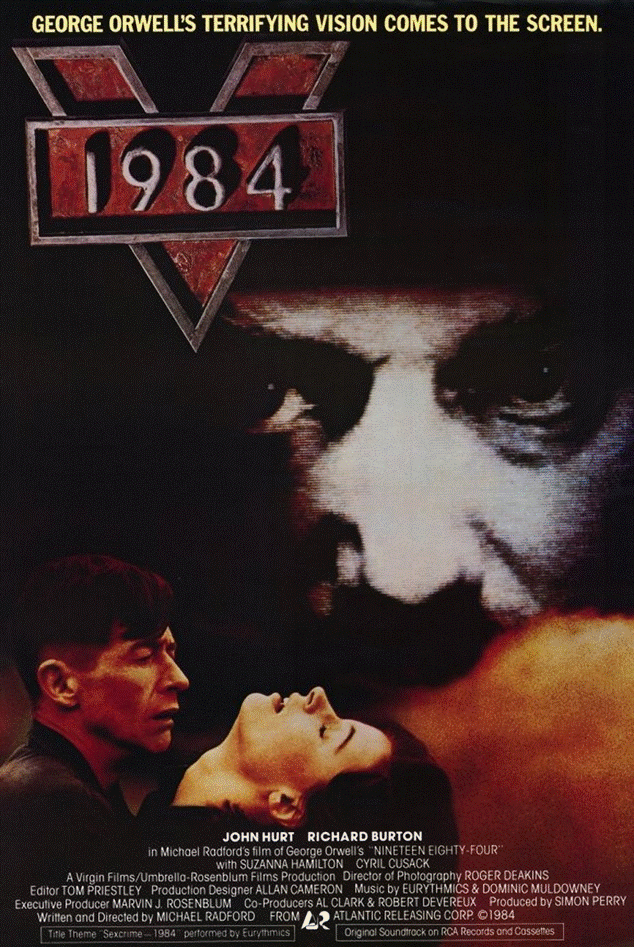
Richard Burton’s final screen performance as O’Brien proved to be the perfect capstone to his career, bringing intellectual authority and menacing charm to the novel’s most complex character. His portrayal of the cultured torturer who combines genuine understanding with absolute ruthlessness captured the essence of Orwell’s vision of how sophisticated tyranny operates. John Hurt’s performance as Winston Smith was equally acclaimed, with critics praising his ability to convey both the character’s intellectual rebellion and his ultimate spiritual destruction.
The film’s visual approach, emphasizing realistic detail over futuristic effects, proved crucial to its success. Sonia Orwell, the author’s widow, had insisted that no futuristic special effects be used, forcing the filmmakers to create their dystopian world through careful attention to architecture, costume, and atmosphere. The use of locations like the disused Beckton Gas Works and Battersea Power Station created a convincing vision of a decaying totalitarian state that felt both familiar and alien.
Earlier Television and Radio Versions
The BBC’s 1954 television adaptation, scripted by Nigel Kneale and starring Peter Cushing as Winston Smith, holds the distinction of being the first major screen adaptation of the novel. Broadcast live during television’s early years, the production created a sensation that demonstrates the power of Orwell’s vision to disturb audiences. The scenes of torture and degradation were so shocking to 1954 audiences that the broadcast was condemned by MPs for “pandering to sexual and sadistic tastes” and reportedly caused at least one death from shock.
The success and controversy of the 1954 adaptation established a pattern for subsequent versions: Nineteen Eighty-Four proved to be material that could reliably generate strong audience reactions while challenging the boundaries of what was acceptable for broadcast. This capacity to disturb and provoke has made the novel attractive to filmmakers and directors seeking to create powerful political statements.
American television adaptations have typically emphasized the novel’s anti-communist themes, reflecting Cold War concerns about Soviet totalitarianism. The 1949 radio adaptation featuring David Niven as Winston Smith mixed Orwell’s narrative with commentary that explicitly connected the fictional world to contemporary political concerns. These early adaptations helped establish the novel’s reputation as a warning about the dangers of communist authoritarianism, an interpretation that Orwell himself tried to correct by emphasizing the universal nature of totalitarian threats.
Cultural References and Continuing Influence
The novel’s influence extends far beyond direct adaptations to encompass countless cultural references, parodies, and homages that demonstrate its continuing relevance to contemporary concerns. Ridley Scott’s famous 1984 Apple computer commercial, which portrayed IBM as Big Brother and Apple as the liberating force, exemplifies how Orwell’s imagery has been appropriated for commercial and political purposes far removed from the novel’s original context.
Reality television shows like “Big Brother” represent both homage and ironic reversal of Orwell’s concept, transforming the nightmare of constant surveillance into entertainment. This commercialization of Orwellian concepts reflects both the novel’s cultural penetration and the way its warnings have been domesticated and normalized through popular culture.
The continuing production of new adaptations—including stage versions, radio plays, and proposed new films—demonstrates that each generation finds new relevance in Orwell’s vision. Recent theatrical productions have emphasized connections to contemporary surveillance technology and social media manipulation, showing how the novel continues to evolve as a tool for understanding new forms of authoritarian control.
Contemporary Significance: George Orwell in the Digital Age
The Prediction That Came True
While 1984 came and went without the obvious fulfillment of Orwell’s prophecy, many observers argue that the novel’s vision has been realized in subtler but equally dangerous ways. The key insight is that modern forms of control operate through seduction rather than coercion, making them potentially more effective than the brutal methods that Orwell imagined. Citizens voluntarily surrender privacy and autonomy in exchange for convenience, entertainment, and the promise of security.
The global response to events like the Edward Snowden revelations in 2013 demonstrated how accurately Orwell had predicted the infrastructure of mass surveillance. The discovery that governments were systematically monitoring citizens’ communications, collecting data on a massive scale, and using sophisticated analytical tools to identify potential threats confirmed that the surveillance state Orwell imagined was not only possible but actively being implemented.
The COVID-19 pandemic accelerated many of these trends, normalizing previously unthinkable levels of government monitoring and control over citizens’ movements and activities. Contact tracing, vaccine passports, and lockdown enforcement mechanisms demonstrated how quickly democratic societies could adopt authoritarian methods when faced with emergency conditions. While these measures were justified by public health concerns, they also showed how easily the infrastructure of control could be expanded beyond its original purpose.
Lessons for Democratic Resistance
Nineteen Eighty-Four’s greatest contribution to contemporary political discourse may be its function as an early warning system for recognizing authoritarian tendencies before they become irreversible. The novel provides readers with a vocabulary and conceptual framework for identifying and resisting the gradual erosion of freedom that often precedes more obvious forms of tyranny.
The book’s emphasis on the importance of objective truth as a foundation for human dignity remains particularly relevant in an era of increasing epistemological confusion. Orwell’s warning that “freedom is the freedom to say that two plus two makes four” highlights how political freedom depends on the ability to maintain basic standards of truth and evidence in public discourse.
Perhaps most importantly, the novel demonstrates that resistance to authoritarianism must begin at the level of consciousness and language. The Party’s ultimate victory in Nineteen Eighty-Four comes not through physical coercion but through the manipulation of thought itself, suggesting that the most effective defense against totalitarian control is the cultivation of intellectual independence and the preservation of clear thinking.
Legacy and Enduring Relevance of 1984 by George Orwell
The Perpetual Warning
Seventy-five years after its publication, Nineteen Eighty-Four continues to serve its intended function as a warning about the potential for totalitarian control to emerge in any society. The novel’s power lies not in its accuracy as prophecy but in its precision as analysis, providing readers with tools for recognizing and understanding the mechanisms by which freedom can be systematically undermined.
The book’s greatest achievement may be its demonstration that totalitarian control operates not primarily through violence but through the manipulation of consciousness. By showing how the Party maintains power through the control of language, history, and truth itself, Orwell revealed the psychological foundations of political freedom and the subtle ways in which they can be eroded.
The continuing relevance of the novel in an era of digital surveillance, social media manipulation, and algorithmic control suggests that Orwell’s insights were more prescient than even he realized. The mechanisms of control he described have evolved and become more sophisticated, but their essential function remains the same: to eliminate the possibility of independent thought and action that might challenge existing power structures.
The Responsibility of Readers
Ultimately, Nineteen Eighty-Four places the responsibility for preserving freedom squarely on individual readers and citizens. The novel suggests that totalitarian control can only succeed when people surrender their capacity for independent thought and accept official versions of reality without question. The preservation of freedom therefore depends on each person’s willingness to maintain intellectual independence and to resist the seductive comfort of letting others do their thinking for them.
The book’s final image—Winston Smith’s declaration of love for Big Brother—serves as both warning and challenge. It demonstrates how completely human dignity can be destroyed by sophisticated forms of control while challenging readers to consider what they would be willing to sacrifice to preserve their own capacity for independent thought and feeling. In this sense, every reader of Nineteen Eighty-Four faces the same choice that confronted Winston Smith: whether to maintain the difficult struggle for truth and freedom or to accept the comfortable certainty of official guidance.
The novel’s enduring power lies in its recognition that this choice is never made once and for all but must be renewed constantly in the face of changing circumstances and new forms of pressure. Orwell’s greatest gift to his readers may be his demonstration that the preservation of human dignity depends not on grand gestures of resistance but on the daily discipline of thinking clearly, speaking truthfully, and refusing to let convenience or fear override the fundamental commitment to intellectual and moral independence.
If you’d like to explore more topics or to access the required quiz for purchasing your raffle ticket, visit our main Quiz & Studies page.
Quiz
Each study material comes with a short practice quiz at the end. These quizzes are completely optional and designed to help you review what you’ve learned and prepare for the Big Quiz.
💡 Use them to test your knowledge in a fun, low-pressure way – no email or name required.
We’re always improving and updating our content. If you spot anything that seems off, don’t hesitate to reach out – your feedback truly matters to us!
👉 Ready to test yourself? Start the Practice Quiz below:
#1. What is the name of the Party’s controlled language designed to limit freedom of thought?
#2. In which year was Nineteen Eighty-Four completed, leading to the novel’s title?
#3. Who played Winston Smith in the acclaimed 1984 film adaptation?
#4. Which historical experience was most crucial in shaping Orwell’s understanding of totalitarian methods for the novel?
#5. Which room number is used for the place where prisoners face their worst fears?
Results

Brilliant! You’ve seen through Big Brother’s lies and mastered the truths behind Orwell’s world. Keep questioning—independent thought is the strongest form of resistance.

Brilliant! You’ve seen through Big Brother’s lies and mastered the truths behind Orwell’s world. Keep questioning—independent thought is the strongest form of resistance.