
One Hundred Years of Solitude by Gabriel García Márquez: Birth of Magical Realism
Gabriel García Márquez: From Colombian Journalism to Global Literary Icon (1927–2014)
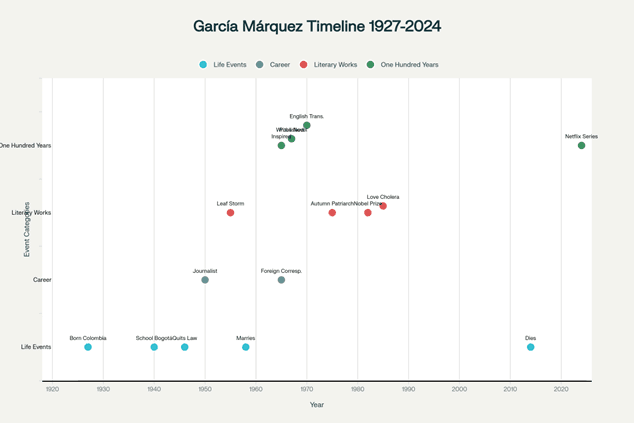
Gabriel García Márquez’s One Hundred Years of Solitude (Cien años de soledad) stands as perhaps the most influential work of Latin American literature in the 20th century, transforming from a 900-page manuscript written in 18 months of creative fervor into a global literary phenomenon that has sold over 50 million copies worldwide and been translated into 46 languages. Published in Buenos Aires on May 30, 1967, this epic chronicle of the Buendía family across seven generations in the mythical town of Macondo not only redefined the possibilities of narrative fiction but also established magical realism as a literary movement that would influence writers from Isabel Allende to Salman Rushdie, from Toni Morrison to Haruki Murakami.
The novel’s extraordinary impact extends far beyond literature: it catalyzed the Latin American Boom of the 1960s, earned García Márquez the Nobel Prize in Literature in 1982, and continues to serve as a masterful allegory for the history, struggles, and dreams of Latin America itself. What began as one man’s attempt to capture the essence of his grandmother’s storytelling in his childhood home of Aracataca, Colombia, evolved into a work that the Nobel Committee described as combining “the fantastic and the realistic in a richly composed world of imagination, reflecting a continent’s life and conflicts”—a testament to literature’s power to transform personal memory into universal myth.
The Making of a Mythmaker and the Journey to Macondo
Childhood Roots Behind One Hundred Years of Solitude
Gabriel José García Márquez was born on March 6, 1927, in the small town of Aracataca, Colombia, a dusty settlement near the Caribbean coast that would later inspire the fictional Macondo. For the first eight years of his life, the most formative period of his imagination, Gabriel lived not with his parents but with his maternal grandparents, Nicolás Ricardo Márquez and Tranquilina Iguarán Cotes, whose influence on his literary development cannot be overstated. His grandfather, a decorated veteran of the Thousand Days’ War (1899-1902), regaled young Gabriel with vivid stories of the civil conflict that had torn Colombia apart, while his grandmother filled the house with supernatural tales, superstitions, and folk beliefs that treated the extraordinary as perfectly ordinary.
This unique household environment, where history and myth intertwined seamlessly, provided the foundation for García Márquez’s later mastery of magical realism. His grandmother’s matter-of-fact delivery of impossible events—ghosts who returned to retrieve forgotten items, prophetic dreams that came true, miraculous healings and inexplicable curses—taught him that the fantastic could be presented as naturally as the mundane. Years later, García Márquez would reflect that his grandmother “spoke about extraordinary things in the same tone of voice she used to tell me to go buy bread,” a narrative technique that would become the hallmark of his literary style.
The physical setting of Aracataca also shaped the future writer’s imagination in crucial ways. The town existed in a state of decline from its brief boom during the banana plantation era, leaving behind abandoned buildings, faded grandeur, and residents who lived as much in memory as in the present. This atmosphere of nostalgic decay, of places haunted by their own history, would later permeate Macondo and give One Hundred Years of Solitude its characteristic tone of melancholy and magical possibility.
From Law Student to Revolutionary Journalist
After his grandfather’s death in 1936, García Márquez was sent to live with his parents and pursue formal education, eventually studying law at the National University of Colombia in Bogotá. However, the literary calling proved stronger than legal obligations, and the young García Márquez abandoned his law studies in 1950 to become a journalist—a career that would profoundly influence his approach to fiction. Unlike many writers who view journalism as separate from their literary work, García Márquez embraced journalism as essential training in observation, precision, and the art of making extraordinary events believable.
During the 1950s and early 1960s, García Márquez worked for various Colombian newspapers including El Espectador and El Heraldo, developing a reputation for fearless investigative reporting and political commentary. His journalism took him throughout Colombia and eventually to Europe as a foreign correspondent, exposing him to different cultures and political systems while honing his skills at capturing the essential human drama within larger historical events. This journalistic experience taught him to find the universal within the particular, a skill that would prove crucial when he began creating the fictional world of Macondo.
Perhaps most importantly, García Márquez’s journalism provided him with direct exposure to the violence, political corruption, and social injustices that plagued Latin America throughout the 20th century. He witnessed firsthand the effects of civil war, foreign economic exploitation, and authoritarian rule—experiences that would later inform the political dimensions of One Hundred Years of Solitude and establish it as more than mere fantasy but as a profound meditation on Latin American history.
The Eureka Moment: From Acapulco to Literary Immortality
The specific moment of inspiration for One Hundred Years of Solitude has become part of literary legend. In 1965, while driving with his family to Acapulco for a vacation, García Márquez suddenly envisioned not just the opening line of his novel but the entire narrative approach he would need to tell the story that had been germinating in his imagination for years. The famous opening—”Many years later, as he faced the firing squad, Colonel Aureliano Buendía was to remember that distant afternoon when his father took him to discover ice”—came to him complete with its distinctive temporal complexity and matter-of-fact presentation of drama.
Recognizing the significance of this moment, García Márquez immediately turned his car around and returned to Mexico City, where he had been living since 1961. He asked his wife Mercedes to manage the family’s finances for the coming months, and for the next year and a half, he dedicated himself entirely to writing what would become his masterpiece. The family lived on Mercedes’s resourcefulness and García Márquez’s determination, often struggling financially as he refused all distractions from his work.
The writing process itself reflected the same magical intensity that characterizes the novel. García Márquez wrote in a small study, often for twelve hours a day, creating not just a story but an entire world with its own geography, genealogy, and internal logic. He meticulously crafted the Buendía family tree, mapped the layout of Macondo, and developed a writing style that could seamlessly blend the historical and the mythical, the realistic and the fantastic.
The Architecture of Myth and Magical Realism
The Buendía Dynasty in One Hundred Years of Solitude
One Hundred Years of Solitude chronicles seven generations of the Buendía family, beginning with the patriarch José Arcadio Buendía and the matriarch Úrsula Iguarán, whose decision to marry despite being cousins sets in motion a family saga marked by incest, violence, passion, and an inexorable sense of doom. The novel’s intricate character structure reflects García Márquez’s belief that Latin American history is cyclical, with each generation doomed to repeat the mistakes of their predecessors despite their efforts to break free from the past.
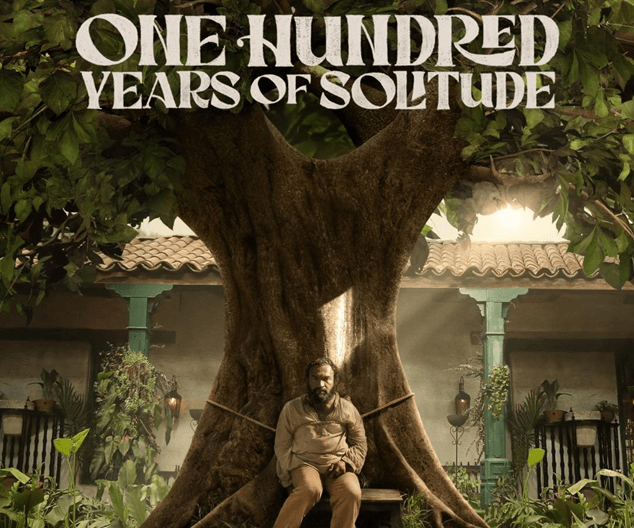
The repetition of names throughout the family tree—with men alternately named José Arcadio or Aureliano and women often named Amaranta or Remedios—serves as more than a narrative device; it becomes a symbolic representation of history’s tendency to repeat itself. Each José Arcadio inherits traits of impulsiveness and physical strength, while each Aureliano displays introspection and solitary contemplation, suggesting that individual destiny may be predetermined by ancestral patterns. This fatalistic element reflects García Márquez’s view of Latin American history as trapped in cycles of violence, exploitation, and missed opportunities for genuine change.
José Arcadio Buendía, the family patriarch, embodies both the visionary potential and the tragic limitations of Latin American leadership. His founding of Macondo represents the dream of creating a new society free from the corruptions of the old world, yet his increasing obsession with esoteric knowledge and his eventual madness symbolize the failure of utopian projects in the face of human nature. His wife Úrsula, who lives over a century and serves as the family’s moral anchor, represents the enduring strength of Latin American women and their crucial role in preserving family and cultural continuity despite the destructive impulses of the men.
Macondo as Microcosm: The Rise and Fall of a World
The fictional town of Macondo functions as both setting and character in One Hundred Years of Solitude, serving as a microcosm of Latin America’s historical trajectory from colonial times through the 20th century. García Márquez deliberately designed Macondo to represent the universal experience of Latin American communities: initial isolation and innocence, contact with modernity and foreign influence, periods of prosperity and decline, and ultimate destruction through the intersection of internal weakness and external exploitation.
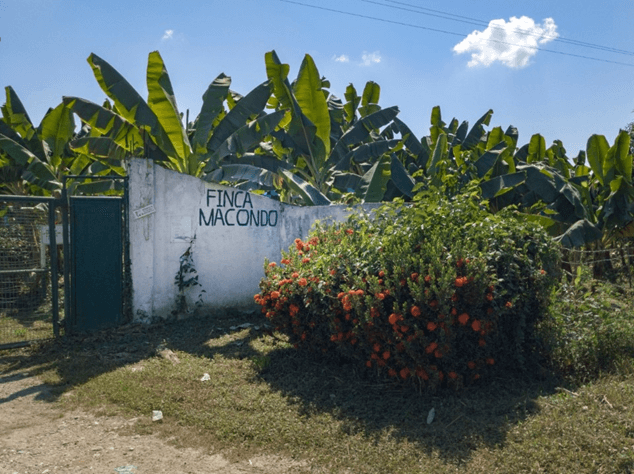
The evolution of Macondo mirrors the historical development of Latin America itself. Initially founded as an isolated utopia, the town gradually opens to the outside world through contact with gypsies, government officials, and foreign companies. The arrival of the railroad symbolizes the double-edged nature of modernization, bringing both opportunities and dangers, while the establishment of the banana plantation represents the economic colonialism that has dominated Latin American development.
Most significantly, the massacre of striking banana workers in Macondo directly parallels the real historical event that occurred in Ciénaga, Colombia, in 1928, when the Colombian military killed hundreds of striking United Fruit Company workers. García Márquez transforms this historical atrocity into a powerful indictment of both foreign economic imperialism and domestic political corruption, showing how official history can be manipulated to erase inconvenient truths. The novel’s treatment of the massacre—where only José Arcadio Segundo remembers the event while the rest of the town forgets—illustrates how political power controls collective memory and historical consciousness.
Magical Realism Techniques in One Hundred Years of Solitude
García Márquez’s mastery of magical realism lies not in the mere inclusion of fantastical elements but in his ability to present the extraordinary as an integral part of everyday reality. Unlike fantasy literature, which creates alternative worlds with different rules, magical realism operates within the recognizable world while expanding its possibilities to include elements that transcend rational explanation. This technique proves particularly effective for representing Latin American experience, where indigenous spiritual beliefs, colonial Catholic mysticism, and modern rationality coexist in complex relationships.
The novel’s magical elements serve multiple narrative functions beyond mere entertainment or atmosphere. When Remedios the Beautiful ascends to heaven while hanging laundry, the event represents not supernatural impossibility but the transcendence of beauty and innocence in a world marked by violence and corruption. When José Arcadio Buendía is tied to a tree and speaks only in Latin, his condition symbolizes the isolation of intellectuals and visionaries from practical political action. When rain falls on Macondo for four years and ten months, the deluge represents both biblical judgment and the cleansing necessary before renewal.
García Márquez’s narrative tone proves crucial to the success of his magical realism. By maintaining a consistent, matter-of-fact voice that treats miraculous and mundane events with equal seriousness, he trains readers to accept the extraordinary as natural while simultaneously suggesting that reality itself may be more magical than commonly supposed. This narrative strategy reflects the author’s belief that the conventional Western distinction between rational and irrational, possible and impossible, may be inadequate for understanding Latin American experience.
One Hundred Years of Solitude : the Cultural Impact and the Latin American Boom
Revolutionary Reception and Literary Transformation
The publication of One Hundred Years of Solitude on May 30, 1967, marked a watershed moment in Latin American literature and global literary culture. The first edition of 8,000 copies sold out within a week in Buenos Aires, an unprecedented achievement for a Latin American novel that immediately signaled the work’s extraordinary appeal. Within months, the book was being reprinted across Latin America and translated into major European languages, establishing García Márquez as an international literary figure and demonstrating that Latin American literature could command global attention.
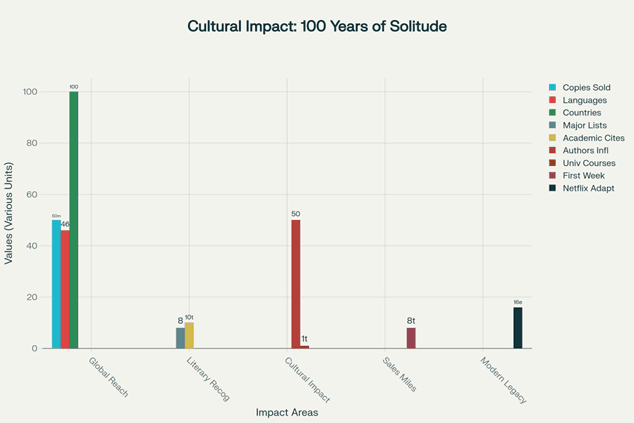
One Hundred Years of Solitude’s success catalyzed what became known as the Latin American Boom, a period from the 1960s through the 1980s when Latin American writers achieved unprecedented international recognition and commercial success. Authors like Mario Vargas Llosa, Julio Cortázar, and Carlos Fuentes gained global readerships, but García Márquez remained the movement’s most celebrated figure, earning comparisons to Miguel de Cervantes and having his novel alternately called “the Bible” or “the Don Quixote” of Latin America.
The literary establishment’s response was equally enthusiastic, with critics recognizing that García Márquez had achieved something unprecedented: creating a work that was simultaneously accessible to popular readers and satisfying to sophisticated critics. The novel’s appearance on prestigious lists including Time magazine’s 100 Greatest Novels and the Modern Library’s best books of the 20th century confirmed its status as a modern classic. More importantly, the book demonstrated that literature emerging from the developing world could rival and even surpass works from the traditional literary centers of Europe and North America.
Influence on Global Literature
The influence of One Hundred Years of Solitude on subsequent literature has been profound and far-reaching, inspiring writers across continents to experiment with magical realist techniques and explore their own cultural mythologies. Isabel Allende’s The House of the Spirits (1982) directly acknowledges García Márquez’s influence while adapting magical realism to Chilean history, while Salman Rushdie’s Midnight’s Children (1981) employs similar techniques to explore Indian partition and independence. The novel’s impact extends beyond Latin American and postcolonial literature to influence writers like Toni Morrison, who incorporated magical realist elements into her exploration of African American experience.
The global spread of magical realism as a literary technique represents more than stylistic influence; it reflects the novel’s validation of non-Western ways of understanding and representing reality. García Márquez demonstrated that literature could be simultaneously local and universal, deeply rooted in specific cultural traditions while speaking to universal human experiences. This achievement encouraged writers from Africa, Asia, and other regions to explore their own cultural traditions and present them on equal terms with Western literary conventions.
Academic recognition of the novel’s importance has been equally significant, with One Hundred Years of Solitude becoming a staple of literature courses worldwide and the subject of countless scholarly studies. Universities across the globe include the novel in comparative literature, world literature, and cultural studies curricula, while its exploration of themes including colonialism, modernization, and cultural identity has made it valuable for interdisciplinary study. The book’s academic prominence ensures that its influence will continue to shape new generations of readers and writers.
Political and Cultural Commentary in One Hundred Years of Solitude
Beyond its literary innovations, One Hundred Years of Solitude functions as a profound meditation on Latin American political and social history, offering a critique of both internal failures and external exploitation that has shaped the region’s development. García Márquez embeds within the Buendía family saga a comprehensive analysis of the forces that have prevented Latin America from achieving its potential: civil warfare, foreign economic domination, political corruption, and the failure of leadership.
The novel’s treatment of the banana company episode provides perhaps its most direct political commentary, transforming the historical United Fruit Company’s operations in Colombia into a parable about economic colonialism. The company’s arrival brings temporary prosperity to Macondo but ultimately leaves the town more impoverished and dependent than before, while the violent suppression of striking workers demonstrates the lengths to which foreign capital and domestic government will go to maintain profitable relationships. The subsequent erasure of the massacre from official memory illustrates how historical truth becomes subordinated to political expedience.
García Márquez’s political vision extends beyond specific historical events to encompass broader patterns of Latin American experience. The novel’s cyclical structure suggests that the region remains trapped in repetitive patterns of violence and exploitation, unable to break free from historical determinism. However, the work also contains elements of hope, particularly in its celebration of Latin American cultural richness, popular resilience, and the possibility of transcendence through love, art, and human connection.
Historical Context and Real-World Parallels in One Hundred Years of Solitude
Colombia’s Troubled Century
One Hundred Years of Solitude emerges from and reflects the particular historical experience of Colombia during the turbulent 20th century, when the country endured civil warfare, political violence, and economic exploitation that made it representative of broader Latin American struggles. García Márquez witnessed and reported on many of these events as a journalist, giving him intimate knowledge of how political violence affects ordinary people and communities.
The Thousand Days’ War (1899-1902), which García Márquez learned about from his grandfather’s firsthand accounts, provides the historical foundation for Colonel Aureliano Buendía’s participation in thirty-two civil wars. This conflict between Conservative and Liberal parties devastated Colombia and established patterns of political violence that would persist throughout the 20th century. The novel’s treatment of civil war emphasizes its ultimate futility, with Colonel Aureliano coming to realize that the differences between Conservative and Liberal causes matter less than the perpetuation of conflict itself.
The banana plantation episode draws directly from the history of the United Fruit Company’s operations in Colombia’s Magdalena region, where García Márquez grew up. The company’s establishment of virtual monopoly control over banana production and export, its exploitation of local labor, and the Colombian government’s violent suppression of worker protests in 1928 provide the factual basis for the novel’s most politically explicit episode. By incorporating this historical event into the Buendía family saga, García Márquez demonstrates how international economic forces directly impact local communities.
The Broader Latin American Experience
While rooted in Colombian history, One Hundred Years of Solitude speaks to the common experience of Latin American nations that achieved political independence in the 19th century but remained subject to foreign economic domination and internal political instability. The novel’s treatment of themes including caudillismo (strongman rule), the conflict between modernity and tradition, and the impact of foreign investment reflects patterns that extend far beyond Colombia.
The cyclical nature of Latin American history, suggested by the novel’s repetitive structure and recurring character names, reflects García Márquez’s perception that the region has been unable to escape patterns established during the colonial period. The continuing influence of external powers, the persistence of social inequality, and the failure of political movements to achieve lasting change create a sense of historical determinism that the novel both documents and laments.
However, García Márquez also emphasizes Latin America’s cultural distinctiveness and creative potential. The novel’s magical realism emerges partly from his belief that Latin American reality itself transcends conventional rational categories, requiring new forms of artistic expression to capture its essence. The extraordinary events in Macondo represent not mere fantasy but alternative ways of understanding and representing experience that reflect indigenous, African, and popular cultural traditions.
One Hundred Years of Solitude: Modern Adaptations and Contemporary Relevance
The Netflix Revolution: Bringing Macondo to Screen
The 2024 Netflix adaptation, executive produced by García Márquez’s sons Rodrigo and Gonzalo, represents the first authorized screen version of the novel and reflects changing possibilities for complex literary adaptation. The series format allows for the expansive storytelling necessary to encompass multiple generations and intricate plot developments, while Netflix’s global reach ensures that the adaptation can be produced in Spanish for international audiences without requiring English-language concessions.
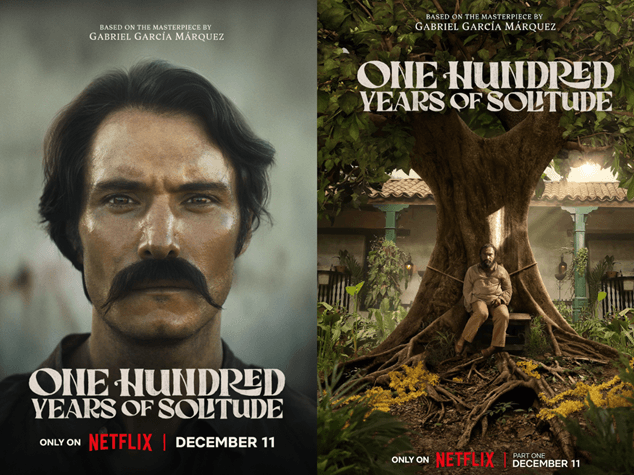
Early critical reception of the Netflix series has been largely positive, with reviewers praising its visual authenticity, attention to the novel’s magical elements, and commitment to preserving the work’s Colombian cultural specificity. The adaptation’s success demonstrates that sophisticated literary works can find new audiences through contemporary media while maintaining their artistic integrity. The series also introduces García Márquez’s vision to viewers who might not read the novel, potentially expanding the work’s cultural influence to new generations.
Educational and Academic Legacy
One Hundred Years of Solitude has become a cornerstone of literature curricula in universities worldwide, serving as an introduction to both Latin American literature and the techniques of magical realism. The novel’s accessibility makes it an effective teaching tool, while its complexity provides material for advanced literary analysis and cultural studies. Students encounter through the Buendía family saga fundamental questions about history, identity, modernization, and the relationship between individual destiny and social forces.
The book’s interdisciplinary appeal has made it valuable beyond literature departments, with courses in history, anthropology, political science, and cultural studies incorporating García Márquez’s vision of Latin American experience. The novel’s treatment of colonialism, economic development, and cultural identity provides frameworks for understanding not only Latin American history but also patterns of global development and cultural interaction.
International academic conferences, scholarly publications, and research projects continue to explore new dimensions of the novel’s meaning and influence, ensuring that García Márquez’s work remains vital to contemporary intellectual discourse. The continuing scholarly attention also validates the novel’s status as a modern classic worthy of sustained study and interpretation.
Contemporary Political and Cultural Resonance
The themes explored in One Hundred Years of Solitude remain remarkably relevant to contemporary political and social issues, both within Latin America and globally. The novel’s treatment of political corruption, economic inequality, and the manipulation of historical memory speaks directly to current concerns about authoritarian governments and the distortion of truth for political purposes. The Buendía family’s struggles with isolation and communication resonate in an era marked by social fragmentation and technological alienation.
Climate change and environmental destruction have given new relevance to the novel’s treatment of humanity’s relationship with nature. The final hurricane that destroys Macondo can be read as environmental apocalypse resulting from human exploitation of natural resources, while the novel’s emphasis on cyclical time suggests that ecological damage may be irreversible. This environmental reading has made García Márquez’s work valuable for contemporary discussions about sustainability and climate crisis.
The novel’s exploration of migration, cultural identity, and globalization also speaks to current worldwide concerns about population movements and cultural preservation. The Buendía family’s attempts to maintain their identity while adapting to external pressures mirror contemporary struggles of communities dealing with globalization’s homogenizing influences. García Márquez’s celebration of cultural distinctiveness within universal human experience provides models for maintaining local identity in a globalized world.
Literary Techniques and Narrative Innovation in One Hundred Years of Solitude
The Mastery of Time and Memory
One of García Márquez’s most significant literary achievements in One Hundred Years of Solitude is his manipulation of temporal structure to reflect the cyclical nature of both personal and historical experience. The novel’s opening line immediately establishes its complex temporal framework by beginning at the moment of Colonel Aureliano’s execution and then moving backward to his childhood memory of discovering ice. This technique of temporal layering continues throughout the narrative, with past, present, and future interweaving to create a sense of time as circular rather than linear.
The novel’s treatment of memory proves equally sophisticated, distinguishing between different types of remembering and forgetting. Individual memory, represented by characters like José Arcadio Segundo who remembers the massacre of banana workers, stands in opposition to collective amnesia imposed by political power. The insomnia plague that strikes Macondo early in the novel serves as a metaphor for the loss of historical consciousness that enables the repetition of destructive patterns.
García Márquez’s manipulation of chronology also serves thematic purposes related to Latin American historical experience. The sense that events repeat across generations reflects his perception that Latin America has been unable to escape patterns of violence, exploitation, and missed opportunities established during the colonial period. The novel’s conclusion, which reveals that the entire Buendía saga has been predetermined and recorded in Melquíades’s Sanskrit manuscripts, suggests that breaking free from historical repetition may be impossible without fundamental changes in consciousness.
Language and Translation Challenges
The distinctive narrative voice of One Hundred Years of Solitude represents one of García Márquez’s most significant literary innovations, creating a tone that can accommodate both magical and realistic elements without jarring transitions. The narrator maintains consistent emotional distance from events, treating miraculous and mundane occurrences with equal matter-of-factness while preserving the rhythms and sensibilities of oral storytelling. This voice reflects García Márquez’s childhood exposure to his grandmother’s storytelling and his professional training as a journalist.
The challenge of translating this distinctive voice into other languages, particularly English, has been crucial to the novel’s global success. Gregory Rabassa’s 1970 English translation, published three years after the Spanish original, has been widely praised for capturing the novel’s tone and rhythm while making it accessible to English-speaking readers. García Márquez himself declared Rabassa’s translation superior to the original in some respects, recognizing the translator’s role in extending the work’s international influence.
One Hundred Years of Solitude’s success in translation demonstrates the universality of its themes despite its deeply rooted Latin American cultural specificity. Readers worldwide have found personal meaning in the Buendía family’s struggles with love, death, solitude, and the search for identity, suggesting that García Márquez achieved his goal of creating a work that was simultaneously local and universal. The continuing appearance of new translations, including recent versions in languages like Mandarin and Arabic, ensures the novel’s ongoing global reach.
The Legacy and Continuing Influence of One Hundred Years of Solitude
The Nobel Prize and International Recognition
García Márquez’s receipt of the Nobel Prize in Literature in 1982 represented not only recognition of his individual achievement but also validation of Latin American literature’s importance on the world stage. The Swedish Academy’s citation specifically praised his ability to combine “the fantastic and the realistic in a richly composed world of imagination, reflecting a continent’s life and conflicts,” acknowledging both his technical mastery and his cultural significance. As the first Colombian and fourth Latin American Nobel laureate, García Márquez opened doors for subsequent recognition of writers from the developing world.
The Nobel recognition transformed García Márquez from celebrated author into global cultural ambassador, a role he embraced throughout the remainder of his career. He used his international platform to advocate for social justice, human rights, and Latin American political independence, while continuing to write novels, short stories, and journalism. His Nobel acceptance speech, “The Solitude of Latin America,” became a manifesto for Latin American cultural identity and political self-determination.
The continuing academic and critical attention to García Márquez’s work, particularly One Hundred Years of Solitude, demonstrates that the Nobel recognition reflected genuine literary achievement rather than mere cultural politics. Scholarly studies continue to explore new dimensions of his work, while new generations of readers discover One Hundred Years of Solitude’s relevance to contemporary concerns. The book’s inclusion in virtually every list of the world’s greatest novels confirms its permanent place in the literary canon.
Impact on Contemporary Writers and Literature
The influence of One Hundred Years of Solitude on subsequent literature extends far beyond direct imitations or magical realist techniques to encompass fundamental changes in how writers approach the relationship between local and universal experience. García Márquez demonstrated that literature rooted in specific cultural traditions could achieve global relevance without sacrificing its distinctiveness, encouraging writers worldwide to explore their own cultural heritage.
Contemporary Latin American writers continue to grapple with García Márquez’s legacy, with some embracing magical realism and others consciously rejecting it in favor of more realistic approaches. The McOndo literary movement, initiated by Chilean writers Alberto Fuguet and Sergio Gómez, explicitly challenges the “Macondo-ism” that some critics argue has confined Latin American literature to exotic stereotypes. This ongoing dialogue about García Márquez’s influence demonstrates the continuing vitality of his contribution to literary discourse.
International writers have found in García Márquez’s example permission to incorporate their own cultural traditions into contemporary literary forms. Authors from Africa, Asia, and other regions have developed their own versions of magical realism while addressing themes of colonialism, modernization, and cultural identity that parallel García Márquez’s concerns. The global spread of techniques pioneered in One Hundred Years of Solitude testifies to the novel’s role in expanding literature’s expressive possibilities.
The Enduring Mystery of Macondo
More than fifty years after its publication, One Hundred Years of Solitude continues to generate new interpretations and meanings, suggesting that García Márquez succeeded in creating a work that transcends its historical moment. Contemporary readers find in the Buendía family saga reflections of their own concerns about globalization, environmental destruction, political authoritarianism, and cultural identity. One Hundred Years of Solitude’s capacity to speak to new historical circumstances while maintaining its artistic integrity demonstrates the achievement of genuine literary permanence.
The transformation of García Márquez’s birthplace Aracataca into a tourist destination celebrating its connection to Macondo illustrates the novel’s impact on cultural geography and identity. While a 2006 referendum to officially change the town’s name from Aracataca to Macondo failed due to low voter turnout, the town embraces its literary legacy through museums, tours, and cultural events that attract visitors from around the world. This phenomenon demonstrates literature’s power to transform places and create new forms of cultural meaning.
The novel’s influence on popular culture, from references in songs and films to its adaptation into the Netflix series, ensures that García Márquez’s vision continues to reach new audiences beyond traditional literary readership. The continuing creativity generated by engagement with One Hundred Years of Solitude suggests that the work has achieved the kind of mythological status that transcends literature to become part of global cultural consciousness.
Conclusion: The Eternal Return to Macondo
One Hundred Years of Solitude stands as a monumental achievement in world literature, representing the successful fusion of deeply local cultural specificity with universal human themes that speak across all boundaries of nation, language, and time. Gabriel García Márquez’s creation of Macondo and the Buendía family saga accomplished something unprecedented: transforming the marginalized experience of Latin America into a central narrative of modern literature while demonstrating that the fantastic and the realistic, the mythical and the historical, can coexist in ways that illuminate rather than obscure the complexities of human experience.
The novel’s enduring influence on literature, politics, and culture worldwide testifies to García Márquez’s success in creating a work that functions simultaneously as entertainment, art, and prophecy. The techniques of magical realism pioneered in the novel have become essential tools for writers seeking to represent experiences that transcend conventional rational categories, while the book’s political vision continues to provide frameworks for understanding the relationship between local communities and global forces.
Perhaps most remarkably, One Hundred Years of Solitude has achieved the rare distinction of being both a popular success and a critical masterpiece, accessible to readers seeking compelling storytelling while rewarding the most sophisticated literary analysis. This dual achievement reflects García Márquez’s understanding that great literature must speak to the heart as well as the mind, must entertain while it enlightens, and must honor the complexity of human experience without losing sight of its fundamental patterns and meanings.
As new generations of readers discover the world of Macondo through the original novel, the Netflix adaptation, and the countless works it has inspired, Gabriel García Márquez’s vision continues to evolve and find new relevance. The prophetic conclusion of One Hundred Years of Solitude suggests that races condemned to one hundred years of solitude do not get a second opportunity on earth—yet the novel itself provides its own contradiction to this pessimistic prophecy, demonstrating literature’s power to create permanent opportunities for human connection, understanding, and hope across the solitudes that divide us.
The yellow butterflies that follow Mauricio Babilonia, the rains that last for years, the children born with pig’s tails, and the winds that finally erase Macondo from the map—these magical elements continue to flutter through readers’ imaginations long after they close the book, testament to García Márquez’s achievement in creating not just a novel but a mythology that has become part of our collective human story. In this way, Macondo achieves a form of immortality denied to its fictional inhabitants, living on in the minds and hearts of readers as a place where the impossible becomes inevitable and the mythical reveals itself as ultimately, miraculously real.
This is why One Hundred Years of Solitude remains one of the most influential novels in world literature.
If you’d like to explore more topics or to access the required quiz for purchasing your raffle ticket, visit our main Quiz & Studies page.
Quiz
Each study material comes with a short practice quiz at the end. These quizzes are completely optional and designed to help you review what you’ve learned and prepare for the Big Quiz.
💡 Use them to test your knowledge in a fun, low-pressure way – no email or name required.
We’re always improving and updating our content. If you spot anything that seems off, don’t hesitate to reach out – your feedback truly matters to us!
👉 Ready to test yourself? Start the Practice Quiz below:
#1. How many copies were sold in the first week of publication in Buenos Aires?
#2. In what year did Gabriel García Márquez win the Nobel Prize in Literature?
#3. In which year was One Hundred Years of Solitude first published?
#4. What is the name of the fictional town where the Buendía family lives?
#5. Which historical event does the banana plantation massacre in the novel directly parallel?
Results

Well done! You’ve mastered the magical world of Macondo and the legacy of Gabriel García Márquez. Keep exploring – every step brings you closer to understanding the heart of magical realism!

Not quite there yet! Don’t worry – even Macondo’s story took generations to unfold. Review the material, try again, and soon you’ll uncover the magic hidden in every detail.