
The Eiffel Tower: History, Facts, and Cultural Impact of Paris’s Iconic Landmark
Construction of the Eiffel Tower: Design, Materials, and Timeline
The Visionary: Gustave Eiffel
Alexandre Gustave Eiffel (December 15, 1832 – December 27, 1923) was a French civil engineer whose name became synonymous with one of the world’s most recognizable landmarks. Born in Dijon, France, Eiffel graduated from the École Centrale des Arts et Manufactures in 1855, specializing in metal construction and bridge engineering.
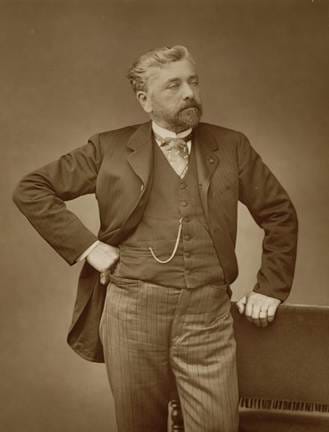
Eiffel’s early career was built on revolutionary bridge designs, including the Bordeaux railway bridge (1858-1860) and the famous Garabit Viaduct (1880-1884), which was the world’s highest bridge at 400 feet above the Truyère River. His expertise in metalwork and understanding of wind resistance principles would prove crucial in designing his most famous creation.
Beyond engineering, Eiffel made significant contributions to architecture, designing the internal iron framework for the Statue of Liberty in New York. His company, G. Eiffel and Company, established workshops in Levallois-Perret, Paris, where precision metalwork was conducted to exacting standards.
How the Eiffel Tower Was Built (1887–1889)
The Eiffel Tower’s origin traces to France’s preparation for the Exposition Universelle of 1889, celebrating the centennial of the French Revolution. The French government announced a competition for a monument that would serve as the exposition’s entrance gateway and demonstrate France’s industrial prowess.
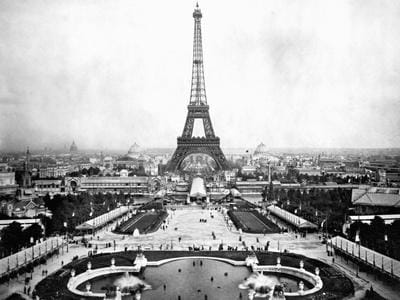
More than 100 proposals were submitted for the competition. Gustave Eiffel’s design for a 300-meter iron tower was selected, beating renowned architects and engineers of the era. The selection committee was impressed by Eiffel’s innovative approach combining structural engineering with aesthetic appeal.
Innovative Engineering of the Eiffel Tower
The tower’s design originated from two of Eiffel’s engineers, Maurice Koechlin and Émile Nouguier, who conceived the idea of an iron lattice tower in 1884. Architect Stephen Sauvestre contributed the decorative elements and curved forms that gave the tower its distinctive appearance.
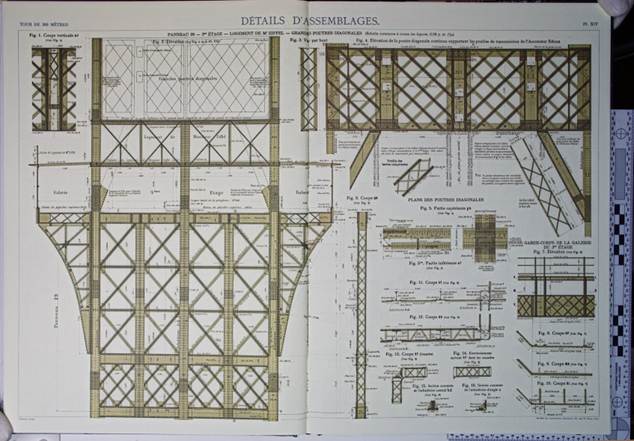
The revolutionary design featured:
- Open-lattice wrought iron construction allowing wind to pass through
- Four curved piers tapering as they rise and joining near the top
- Three observation levels at different heights
- Prefabricated components for efficient assembly
Architecture of the Eiffel Tower: Height, Levels, and Structure
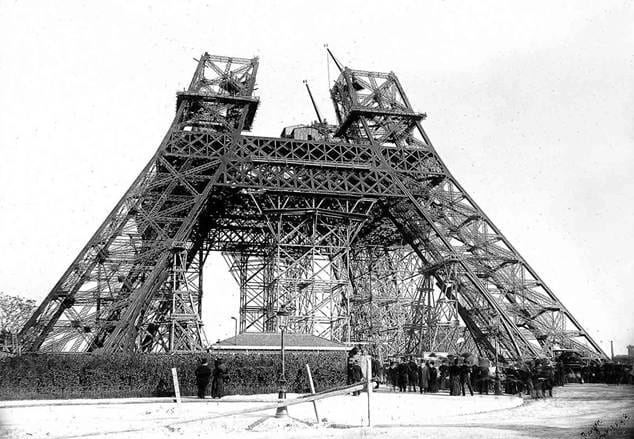
Construction officially began on January 28, 1887, with foundation work on the Champ de Mars. The foundations required massive concrete blocks to support the tower’s weight, with special consideration for the proximity to the Seine River.
Revolutionary Construction Methods
The construction process showcased several engineering innovations:
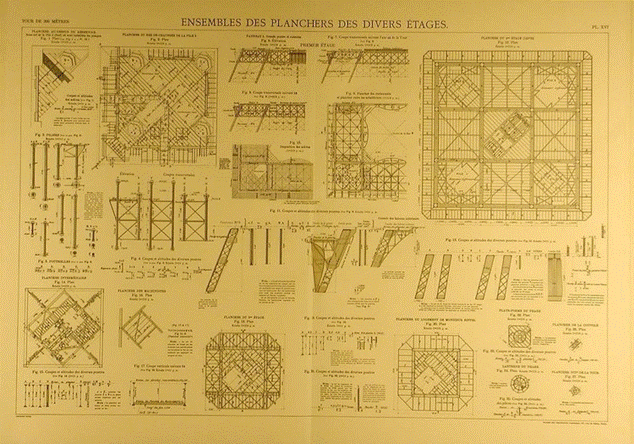
Prefabrication: All 18,038 iron pieces were manufactured at Eiffel’s Levallois-Perret factory, each designed to an accuracy of one-tenth of a millimeter.
Assembly System: Components were transported to the site and assembled like a giant construction set, using 2.5 million rivets to connect the pieces.
Safety Measures: Despite dangerous working conditions 300 meters above ground, Eiffel implemented safety precautions including movable gangways, guardrails, and screens. Only one worker died during construction—a remarkable safety record for the era.
Construction Timeline
The tower’s construction proceeded with remarkable efficiency:
- July 1, 1887: Assembly of supports began
- March 20, 1888: First level completed
- August 21, 1888: Second level finished
- March 15, 1889: Construction completed
- March 31, 1889: Official inauguration
Total construction time: 2 years, 2 months, and 5 days.
Materials Used in the Eiffel Tower
The Eiffel Tower was constructed using puddling iron (wrought iron), a revolutionary choice for large-scale construction. This material offered several advantages:
- Flexibility to withstand wind stress and temperature changes
- Strength-to-weight ratio superior to stone or brick
- Resistance to weather with proper maintenance
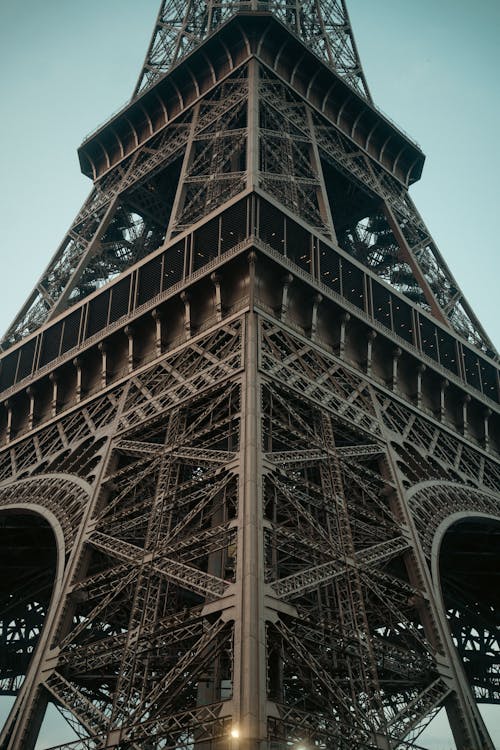
The tower’s specifications include:
- Total height: 324 meters (1,063 feet) including antennas
- Structural height: 300 meters (984 feet)
- Base dimensions: 125 × 125 meters (410 × 410 feet)
- Total weight: 10,100 tons
- Iron framework weight: 7,300 tons
Architectural Innovation
The tower’s lattice design was both functional and aesthetic. The open structure allowed wind to pass through, reducing wind resistance by 99% compared to a solid structure of the same dimensions. The tower can sway up to 7 inches in strong winds and expands up to 15 centimeters due to thermal expansion.
The Eiffel Tower as a Symbol of Paris and France
From Controversial Structure to Global Icon
The tower’s construction faced significant opposition from Paris’s artistic and intellectual community. Notable critics included writers Guy de Maupassant and Alexandre Dumas, who called it an “odious shadow” and a “tragic street lamp”.
A famous petition signed by prominent artists, including composer Charles Gounod and architect Charles Garnier, denounced the tower as a threat to French artistic heritage. However, public opinion shifted dramatically after its completion.
Symbol of France
The Eiffel Tower evolved from controversial structure to beloved national symbol. During World War II, French resistance fighters cut the lift cables when Hitler visited Paris, forcing him to climb the stairs—a powerful symbol of French defiance.
The tower has become a universal symbol representing:
- French ingenuity and industrial prowess
- Romance and elegance
- Architectural innovation
- Cultural heritage and national pride
The Eiffel Tower in Art, Literature, and Film
Cinema and Film
The Eiffel Tower has appeared in countless films since cinema’s early days. Notable appearances include:
Early Cinema (1890s-1920s):
- 1897: Louis Lumière’s panoramic film from the tower top
- 1924: René Clair’s “The Crazy Ray” (Paris Qui Dort)
Golden Age Hollywood:
- 1939: Ernst Lubitsch’s “Ninotchka” starring Greta Garbo
- 1951: “The Lavender Hill Mob” British comedy
Modern Cinema:
- Disaster Films: Frequently destroyed in movies like “Mars Attacks!” and “Armageddon”
- Romantic Comedies: Featured in “Moulin Rouge” and countless love stories
- Action Films: Superman films, Men in Black: International
Literary and Artistic Significance
The tower has inspired countless artists, writers, and designers throughout its history. It appears in literature, paintings, fashion, and jewelry design, cementing its status as a cultural icon beyond its architectural significance.
Tourism and Visitor Experience
The Eiffel Tower is one of the world’s most visited paid monuments:
Annual Visitors:
- 2024: 6.3 million visitors (projected)
- 2023: 6.318 million visitors (8% increase from 2022)
- 2022: 5.85 million visitors (178% increase from pandemic lows)
- Daily average: 15,000-25,000 visitors
Visitor Demographics:
- 75% international visitors, 25% French nationals
- Leading countries: France (19.6%), USA (13.7%), Germany (7.6%), UK (7.2%), Spain (5%)
Revenue Generation:
- 2022: €105.99 million in total revenue
- 2019: €99.18 million (pre-pandemic peak)
Visitor Experience
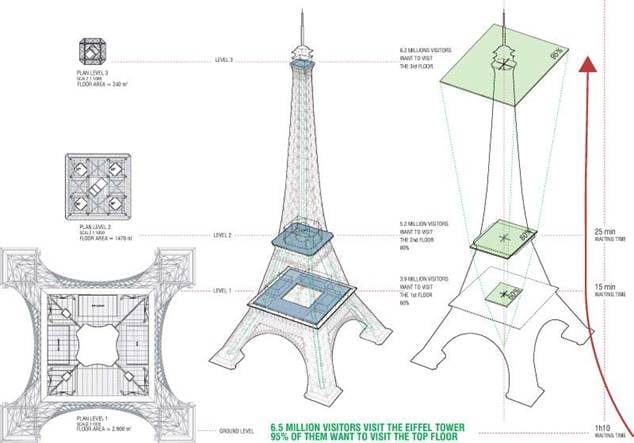
The tower offers three observation levels:
- First floor: 57 meters high, 4,010 m² surface area
- Second floor: 115 meters high, 1,360 m² surface area
- Third floor: 276 meters high, 264 m² surface area
Visiting times vary:
- Peak season (April-September): Up to 2-3 hours wait without tickets
- Off-peak: 15-30 minutes with advance tickets
- Best times: Early morning (9:30 AM) or evening (after 8 PM)
Maintenance and Preservation
Painting and Maintenance Cycles
The Eiffel Tower requires extensive maintenance to preserve its iron structure:
Painting Schedule:
- Complete repainting: Every 7 years
- Upper sections: Every 5 years
- Lower sections: Every 10 years
- Paint required: 60 tons per complete cycle
- Duration: 18-20 months per cycle
- Cost: €4 million per painting cycle
Maintenance Challenges:
- 19 previous paint cycles have added 700+ tons to the structure’s weight
- Paint removal now required on 10% of surface area
- 25 painters using 1,500 sets of work gear and 1,000 pairs of gloves
Modern Renovations
In preparation for the 2024 Paris Olympics, a €60 million renovation project was launched. The project includes:
- Stripping and repainting significant portions
- Upgrading visitor facilities and security
- Installing bulletproof glass walls for security
- Modernizing elevators and safety systems
Technical Specifications and Engineering Data
Structural Details
Physical Dimensions:
- Total height with antennas: 324 meters (1,063 feet)
- Architectural height: 300 meters (984 feet)
- Ground footprint: 15,625 m² (125m × 125m)
- Wind surface area: 8,515 m²
Construction Materials:
- Puddling iron pieces: 18,038 individual components
- Rivets: 2.5 million
- Total weight: 10,100 tons
- Iron framework: 7,300 tons
- Foundation depth: Below ground level to bedrock
Engineering Innovations
The tower represented several engineering breakthroughs:
- Prefabrication on an unprecedented scale
- Wind resistance calculations and open-lattice design
- Thermal expansion accommodation
- Precision assembly using 19th-century tools
The Eiffel Tower Today: Tourism, Technology, and Global Fame
After completing the tower, Eiffel shifted focus to aerodynamics and meteorology. He used the tower for wind resistance experiments and built the first aerodynamic laboratory at Auteuil, contributing significantly to early aviation development.
How Many People Visit the Eiffel Tower Each Year?
The Eiffel Tower generates substantial economic benefits:
- Direct tourism revenue: Over €100 million annually
- Broader economic impact: Billions in tourism spending for Paris
- Employment: Hundreds of direct jobs, thousands of indirect positions
- Cultural value: Immeasurable contribution to France’s global image
Modern Status
Today, the Eiffel Tower stands as:
- UNESCO World Heritage Site (as part of Paris, Banks of the Seine)
- Most visited paid monument in the world
- Symbol of France recognized globally
- Engineering achievement studied by students worldwide
- Tourist destination attracting nearly 7 million visitors annually
Why the Eiffel Tower Remains One of the World’s Most Famous Landmarks
The Eiffel Tower represents one of humanity’s greatest engineering and cultural achievements. From Gustave Eiffel’s revolutionary vision to its construction using innovative 19th-century techniques, the tower demonstrated that iron could create structures of unprecedented height and beauty.
What began as a temporary structure for the 1889 World’s Fair has become an eternal symbol of French culture, engineering excellence, and human ambition. The tower’s evolution from controversial “eyesore” to beloved global icon illustrates how revolutionary architecture can reshape public perception and cultural identity.
Standing at 324 meters tall, constructed from 18,038 precisely crafted iron pieces and 2.5 million rivets, the Eiffel Tower continues to inspire engineers, artists, and dreamers worldwide. Its maintenance requirements, visitor statistics, and cultural impact demonstrate that great architecture transcends its original purpose to become a living monument to human creativity and perseverance.
The Iron Lady of Paris remains not just a tourist attraction but a testament to the power of vision, engineering excellence, and the enduring appeal of structures that dare to reach toward the sky.
If you’d like to explore more topics or to access the required quiz for purchasing your raffle ticket, visit our main Quiz & Studies page.
Quiz
Each study material comes with a short practice quiz at the end. These quizzes are completely optional and designed to help you review what you’ve learned and prepare for the Big Quiz.
💡 Use them to test your knowledge in a fun, low-pressure way – no email or name required.
We’re always improving and updating our content. If you spot anything that seems off, don’t hesitate to reach out – your feedback truly matters to us!
👉 Ready to test yourself? Start the Practice Quiz below:
#1. What was the total height of the Eiffel Tower including antennas?
#2. What was the Eiffel Tower built to commemorate?
#3. How long did it take to construct the Eiffel Tower?
#4. How many iron pieces were used in its construction?
#5. How many rivets were used to hold it together?
Results

Magnifique! You really know your Eiffel facts! You’ve climbed every level of this quiz like a true Paris explorer. Keep that curiosity alive — every fact you master brings history to life.
Almost there! You didn’t reach the top this time — but even the Eiffel Tower took two years to build. Take another look, learn a little more, and give it another try. You’ll get there!