
Tim Hughes and Social Selling Mastery: Building Trust and Driving Revenue in the Digital Age
Who Is Tim Hughes and Why He Matters in Social Selling
Social Selling Mastery by Tim Hughes is a definitive framework for driving sales and business growth using social media platforms, especially LinkedIn, by focusing on authentic networking, buyer-centric engagements, and establishing authority online.
The book’s core message is that modern sales success relies on building real, trust-based relationships via social platforms rather than outdated cold-calling or impersonal email blasts. Hughes demonstrates how decision-makers and changemakers can be reached by providing genuine value, engaging in purposeful online conversations, and creating a recognizable social presence which positions sellers as trusted advisors. Applying this approach can result in higher conversion rates and competitive advantage in both B2B and B2C contexts.
Step-by-Step Process
- Craft Buyer-Centric Profiles: Begin by redesigning your social profile – especially LinkedIn – to speak to the needs, interests, and priorities of your target buyers, rather than simply listing your own achievements.
- Grow and Nurture Networks: Systematically connect with genuine prospects and peers, without spamming, and maintain these relationships by sharing valuable, relevant content.
- Engage in Conversations: Instead of pitching or selling immediately, participate in discussions, comment thoughtfully on others’ posts, and foster dialogue in areas of mutual interest.
- Create Authority Content: Publish blogs, insights, and thought leadership content that add value and reinforce expertise in your chosen area, establishing trust and recognition.
- Scale Social Selling in Teams: Implement social selling strategies organization-wide, using maturity models for investment, risk management, and technology platforms.
- Measure Results: Regularly assess the effectiveness of social selling efforts through conversion rates, engagement metrics, and revenue impact.
The Social Revolution According to Tim Hughes
Tim Hughes’s introduction to Social Selling Mastery establishes a narrative of profound change in how buyers and sellers interact, driven entirely by the digital and social media revolution. Buyers—whether professionals or consumers—are now empowered to conduct extensive research, self-educate, and network online before reaching out to sales teams or brands directly. This new autonomy means buyers often know precisely what they want, which solutions suit them best, and even who they want to engage with, by the time communication begins.
Hughes underscores that this shift renders traditional selling approaches—cold calls, unsolicited emails, formulaic pitches—ineffective in reaching today’s informed and discerning audience. Prospects move through up to 70% of their buying process online, reviewing opinions, reading content, and observing interactions on social platforms long before making themselves visible to sellers. When they do initiate contact, their decision is often already heavily influenced by their digital findings.

This new dynamic, Hughes explains, requires sales professionals and organizations to abandon the historical mindset of interruptive and transactional communication. Instead, they must adapt to a world where relationships are built and trust is earned through social engagement, compelling content, and authentic interaction within digital communities. Sellers must position themselves as authentic, helpful resources who enable buyers to make better decisions—rather than simply pushing products or services.
By highlighting case studies and industry data, Hughes demonstrates how brands and sellers who adapt to social behaviors dramatically increase conversion rates and foster long-term client loyalty, compared to those who rely on outdated tactics. Ultimately, the “Social Revolution” is not merely about technology; it is a fundamental reinvention of the human side of sales, where understanding the buyer’s online journey and actively participating in their digital environment becomes the key to influence and success.
How Tim Hughes Builds Trust in Digital Communities
Building trust in digital communities, as Tim Hughes emphasizes in Social Selling Mastery, is at the very heart of successful social selling strategies. In today’s business environment, buyers expect authentic, transparent interactions and are quick to identify insincere messaging or overt pitching. Trust is established over time by genuinely engaging in online spaces, being responsive, and sharing valuable insights that center on resolving the audience’s needs rather than pushing products.
Digital trust starts with a professional and honest online presence—a profile that reflects both credibility and a willingness to be scrutinized. Sellers become trusted advisors by consistently providing thoughtful commentary, expertise, and empathetic interactions that demonstrate a sincere interest in helping the community. By addressing concerns openly, responding to questions, and offering advice tailored to specific problems, sellers humanize their brand and create meaningful relationships.
Content plays a pivotal role in nurturing trust. Sharing relevant articles, thought leadership posts, industry news, and authentic testimonials not only reinforces expertise but keeps the seller visible and approachable. This isn’t about bombarding prospects with self-promotional material; instead, it’s about honest dialogue and the continual exchange of helpful information. Engagement should always prioritize the buyer’s interests, fostering connection and credibility instead of a transactional atmosphere.
Importantly, cultivating trust within digital communities extends to the collective efforts of sales teams and employees, whose social engagement can bolster a company’s reputation far more than top-down branding alone. When sales professionals collaborate, share knowledge, and engage openly, they inspire confidence and long-term loyalty among prospects.
Authenticity, transparency, and consistent contribution form the pillars of trust in digital communities. As Hughes’s approach shows, earning trust is not an instant result—it’s an ongoing process of listening, understanding, and delivering genuine value in every interaction.
Buyer-Centric Social Profiles According to Tim Hughes
Buyer-centric social profiles—especially on platforms like LinkedIn—are thoughtfully crafted to speak directly to the needs and aspirations of target clients, rather than boasting about personal achievements or credentials. Tim Hughes highlights that the critical shift is from “resume-centric” to “resource-centric”: every element of the profile, from headline to summary and experience sections, is framed around how the seller can add value, solve problems, and support buyers’ goals.
A professional photo is the first signal of trust. The image should be inviting and genuine, reflecting the personality that buyers can expect when reaching out—a small detail with a big impact on first impressions. Beyond visual cues, the headline and summary sections serve as digital billboards for buyers. Instead of listing titles, the headline should state who is helped, the challenges addressed, and the unique value delivered. For example, “Helping mid-market businesses grow by solving digital transformation challenges” draws in buyers seeking solutions, rather than a job-seeker or quota-hitter.
The “About” section is a storytelling platform—a tailored narrative that describes expertise, empathy, and results achieved for clients, using the language of problems solved and futures improved. This approach invites buyers to see themselves in the profile, envision outcomes, and feel understood. Endorsements, case studies, and testimonials provide social proof—from real customers who have benefited from working with the seller—reinforcing credibility and authority.
A buyer-centric profile is continuously updated with relevant content and showcases a willingness to engage in meaningful dialogue. Active participation—commenting on posts, sharing insights, and being responsive—completes a holistic digital presence that draws prospects naturally into conversation, as they recognize the seller as a proactive and valuable resource. In essence, the profile becomes a gateway to relationship-building: a digital handshake that builds trust and positions the seller as an ally in the buyer’s journey, not simply another vendor.
he Relationship Funnel in Tim Hughes’ Social Selling Model
The concept of the relationship funnel and nurturing, as presented by Tim Hughes, reimagines the traditional sales funnel for the digital age—prioritizing relationship-building and ongoing engagement over direct selling. Rather than targeting a large, undifferentiated mass and hoping to convert some through repeated outreach, the relationship funnel starts by fostering authentic connections with individuals on social platforms—often long before any buying intent is evident.
Progression through the funnel is not about moving prospects mechanically from awareness to purchase, but about gradually building credibility, influence, and personal rapport within relevant communities and networks. Sellers identify key contacts and accounts, connect with them on platforms like LinkedIn, and then invest in nurturing those relationships through personalized engagement, meaningful interactions, and the consistent sharing of insightful content. Each positive touchpoint—whether replying to a comment, sharing an article, or offering advice—reinforces trust and keeps the seller top-of-mind for when the prospect’s need arises.
The nurturing process is subtle and patient. Hughes explains that genuine interaction is essential—jumping straight into a sales pitch is a counterproductive “cold calling” tactic that fails to take advantage of the open communication channels social media provides. Instead, by recognizing when prospects show interest, sellers deepen their engagement, act as trusted advisers, and continue to provide value with zero pressure. As a result, when buyers are ready to act, they naturally return to those who have consistently proven helpful and knowledgeable.
This model also leverages community influence. By embedding oneself within engaged networks, sellers empower others in the community to recommend them when the time is right—a powerful form of indirect advocacy that expands reach and credibility. The relationship funnel thus transforms passive contacts into loyal clients through respect, patience, and targeted nurturing, dismantling barriers to sales and maximizing opportunities for sustainable growth
Creating Influence Through Content: Tim Hughes’ Approach
Creating influence through content is one of Tim Hughes’s central pillars for succeeding in social selling. Sellers build real authority and drive engagement by sharing consistently valuable, insightful content—moving beyond company brochures or self-promotional material to deliver information that genuinely improves buyers’ knowledge and helps solve their problems.
This approach requires a deliberate strategy: content is crafted to address the specific pain points, aspirations, and industry challenges of target audiences. Practical posts, expert analyses, case studies, and even authentic stories establish the seller as both credible and relatable. By offering unique perspectives and actionable advice, sellers become go-to resources, attracting followers and sparking meaningful conversations with prospects and changemakers.
It’s not just the depth of content but also the authenticity that matters. Hughes stresses that trust is built when the content is seen as honest, relevant, and educational—never overtly salesy or generic. Engaging posts are often rooted in firsthand experience and delivered in a tone that invites genuine dialogue, not manufactured hype. Sellers should actively monitor engagement, responding to comments, questions, and even critical feedback, demonstrating accessibility and reinforcing relationships.
The multiplier effect comes when sales teams collaborate on content creation, sharing micro-niched insights and industry-specific tactics across networks. This groundswell of authentic voices and expertise amplifies reach and reputation, making the seller—and the sales organization—more visible and influential in community searches and recommendations.
Ultimately, the ability to influence through content hinges on empathy, expertise, and consistency. For Hughes, content is the bridge between digital relationship-building and commercial success, delivering lasting impact because it earns trust, builds reputation, and catalyzes conversations that lead directly to pipeline growth and new business opportunities
Scaling Social Selling in Organizations with Tim Hughes
Scaling and institutionalizing social selling, according to Tim Hughes, involves elevating the practice from individual sales reps to an organization-wide strategy—embedding it in team operations, leadership priorities, and company culture. Rather than leaving social selling to chance or isolated actors, successful organizations build formal programs, frameworks, and training that enable all employees to engage authentically and effectively on digital platforms.
The first step is leadership buy-in and alignment. Senior management, sales enablement, and marketing must collaborate on clear goals: whether increasing qualified leads, maintaining visibility, or building digital authority, these objectives frame the program’s priorities and metrics. Hughes recommends selecting volunteers and champions for pilot initiatives—those eager to invest in social selling—before rolling out training across wider teams. External specialists or internal coaches may help implement a consistent methodology, which replaces ad-hoc tips with a structured, repeatable process for engagement, nurturing, and content creation.
Technological infrastructure is also key: CRM systems, content management platforms, and governance/compliance processes help manage activity at scale, track success, and mitigate risks. Regular frameworks for measurement are established, from pipeline and meeting rates to digital reputation growth, iterating and optimizing based on results. Hughes also stresses the importance of a common language and the removal of guesswork—processes should be intuitive so staff are clear on next steps and best practices at every stage.
Institutionalizing social selling means long-term investment in culture, skills, and systems. By fostering collaboration, providing ongoing training, and enabling employees to share personalized content, organizations transform their brand presence, increase influence, and systematically drive sales results beyond what isolated efforts can achieve
Measurement and Optimization in Tim Hughes’ Social Selling Strategy
Measurement and optimization in social selling, as set out by Tim Hughes, focuses on tracking real-world outcomes from social engagement rather than relying on vanity metrics like followers or likes. The objective is to connect daily digital activities directly to core business development measures: conversations generated, qualified meetings secured, and, most critically, revenue gained from social selling efforts.
Effective measurement starts by counting conversations and meetings that are a direct result of social activity—whether replies to posts, messages exchanged, or invitations accepted for demos and consultations. Companies can use tools like LinkedIn’s Social Selling Index (SSI) early in adoption to benchmark individual and team behaviors, but Hughes warns this only measures engagement and network activity, not tangible business outcomes. True success is based on tracking the pipeline: the number of opportunities created, their value, and the percentage progressing to closed deals that can be attributed to social selling.
Optimization is an ongoing process, leveraging regular reviews of engagement rate, conversion metrics, and revenue attribution to refine strategies. This might include improving messaging response rates, personalizing content for audience segments, or experimenting with the timing and format of outreach for higher impact. Technologies such as CRM integrations and analytics dashboards facilitate this data-driven approach, allowing organizations to iterate and enhance performance at scale.
Organizations that measure and optimize social selling find that a fully matured program can deliver a 20–30% increase in new revenues versus legacy sales approaches—highlighting the financial and operational advantages of consistent, strategic social engagement. Hughes advocates for clarity, accountability, and continuous improvement, emphasizing that social selling should be evaluated and enhanced like any other high-value business investment.
Key Quotes and Insights from Tim Hughes
“At its heart, social selling is about building authentic relationships and adding value so people come to you—not chasing prospects with impersonal pitches.”
“People buy from people they know, like, and trust. Social selling lets you win trust before the sales conversation even begins.”
“Your social profile is no longer your CV; it’s your digital reputation.”
Social Selling Mastery is essential reading for professionals and organizations seeking to harness the power of social platforms for business development—centering on authenticity, meaningful engagement, and strategic content to build lasting client relationships.
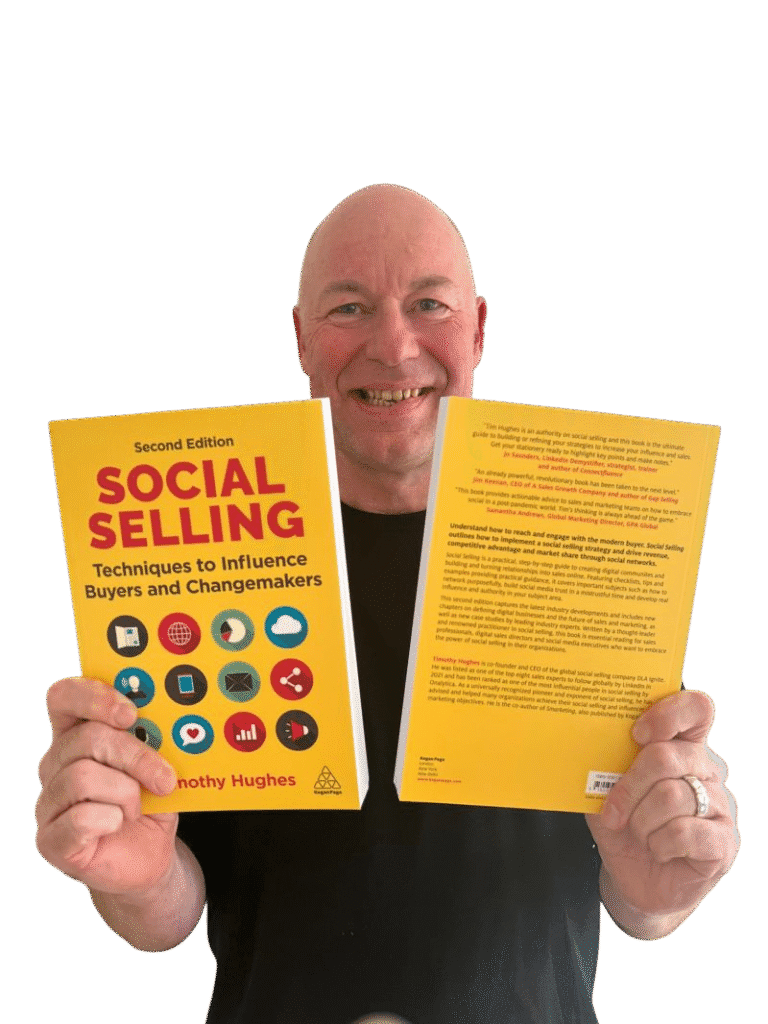
If you’d like to explore more topics or to access the required quiz for purchasing your raffle ticket, visit our main Quiz & Studies page.
Quiz
Each study material comes with a short practice quiz at the end. These quizzes are completely optional and designed to help you review what you’ve learned and prepare for the Big Quiz.
💡 Use them to test your knowledge in a fun, low-pressure way – no email or name required.
We’re always improving and updating our content. If you spot anything that seems off, don’t hesitate to reach out – your feedback truly matters to us!
👉 Ready to test yourself? Start the Practice Quiz below:
#1. Which online platform is especially highlighted for social selling in the book?
#2. What is the main focus of Social Selling Mastery?
#3. What type of content helps sellers build authority online?
#4. Who is the author of Social Selling Mastery?
#5. What is the key principle of successful social selling according to Tim Hughes?
Results

You just closed the deal with knowledge! Social selling pro in the making. If this were LinkedIn, your answers would already be going viral!

Looks like this pitch didn’t land… but hey, even top sellers miss a deal now and then. Give it another shot!